Help assess, intervene and manage trauma
Build a foundation in theory and research pertaining to crisis, abuse, and trauma in the Bachelor of Social Work (BSW) with a concentration in Crisis and Trauma. The curriculum’s focus ranges from immediate crisis assessment, intervention, and management to more specific issues; child abuse prevention and treatment, intimate partner violence, and investigating the impact of trauma for individuals and families.

Degree:
BSW
Delivery:
On campus & online
Campus:
Oakland
Transfer credits:
Up to 90 credits
Crisis & Trauma curriculum
Students are to complete the major requirements as well as the following courses in crisis and trauma including the impact of trauma, crisis intervention, child abuse prevention and treatment and intimate partner violence. Prior to taking these courses, students complete the prerequisite of either “Introduction to Counseling” or “Theories and Methods of Direct Practice.”
With approval, transfer students may submit a transfer course for one of the above. A minimum of 9 credits in crisis and trauma must be taken at Carlow University.
Notable Courses
- The Impact of Trauma: This course introduces the student to the field of psychological trauma. The course will be composed of lectures, discussions, guest speakers and videos. It will provide the student with an understanding of the various types of trauma and treatment, trauma theory, the impact of trauma on the mind, body, and spirit, and the historical development of trauma as a clinical entity. Students will gain an appreciation of the depth of trauma and trauma reactions in the fields of social work and psychology.
- Crisis Intervention: An introduction to the various types of crisis situations practitioners may encounter. In addition, the course will offer various techniques and provide presentations on a variety of components needed to assist the student in understanding the concepts of crisis intervention. Crisis events can occur in a variety of ways, and as practitioners, how we deal with these events can make the difference between healing and hindrance. Emphasis will be upon a general understanding of the implications of techniques to modify, manage, and cope with crisis situations.
- Child Abuse Prevention and Treatment: This course is designed to familiarize students with child abuse in its multiple forms. Students will have the opportunity to learn the many signs and symptoms of child maltreatment that manifest in both childhood and adulthood, and will investigate poisonous pedagogy, open/closed family systems, and the impact of shame on our lives. Students will have an opportunity to gain an in-depth understanding of the types of child abuse as well as the signs and behaviors associated with each type.

For a more detailed curriculum, view our course catalog, or request more information to talk to an admissions representative.
Alternate degree completion options
Online Degree
Gain the knowledge you need at your convenience with our online degree option. When applying, indicate your interest in the online option.
3-Year Degree
Finish your bachelor’s degree in three years by following a 3-year academic plan. Courses are taken across fall, spring and summer terms with summer courses completely online. When applying, indicate your interest in the 3-Year Degree option.
Accelerated
Fast track your way to a master’s by taking graduate courses as an undergraduate student. Course credits count toward both degrees. Apply for the accelerated option after your sophomore year.
Career opportunities for Social work majors
Graduates find jobs as social workers, individual case managers, support group facilitators, victim advocates, child and family advocates, protective service workers, disability and aging advocates, residential case managers, and social services coordinators/administrators/directors.
Increased demand for healthcare and social services will continue to fuel the need for this occupation.

Accreditation
The Bachelor of Social Work is accredited by the Council on Social Work Education (CSWE). CSWE’s Commission on Accreditation is responsible for developing accreditation standards that define competent preparation and ensuring that social work programs meet them. CSWE administers a multistep accreditation process that involves program self-studies, site visits, and reviews. Carlow University’s next accreditation visit will be in 2028.
View or download the following for more information:
- View or download the Bachelor of Social Work field manual [pdf]. It contains information and documents specific to the field placement component of the program
- View or download the Bachelor of Social Work program handbook [pdf]. It contains policies, procedures and information about the program
- View or download the Assessment of Student Learning Outcomes [pdf].
Admission requirements and application process
- Submit an application for admission. It is free to apply.
- Request that official transcripts from all current and previous institutions you’ve attended are sent directly to the Carlow University Office of Admissions.
Apply
anytime
Start terms:
Fall, Spring & Summer
Be prepared and confident in your career
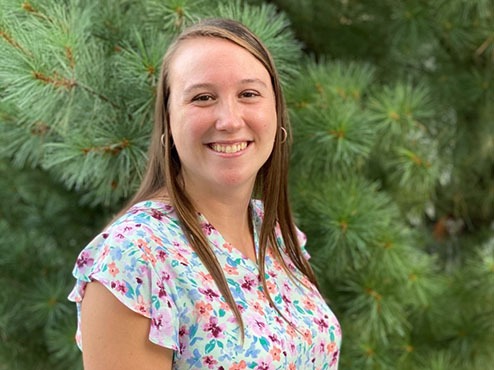
Krista Burdett ’18 said the Carlow social work program challenged her to think like a social worker: from case studies to role-playing to writing a research paper. “When I entered the field after graduation, I felt confident in myself because I was fully prepared to handle situations. Now that I’m in the field, I reflect back to my course work to pull from competencies and skills I learned.”
Social Work faculty
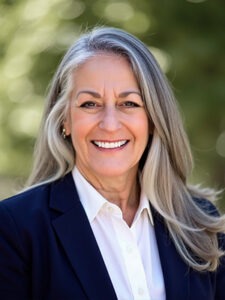
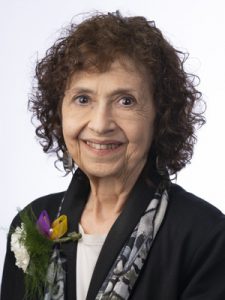
Marsha Frank, PhD, LCSW Associate Professor, Social Work (MSW)

Carrie Stott, PhD, LSW Program Director, Assistant Professor, Social Work (MSW)
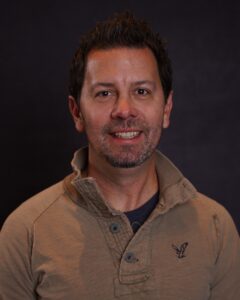
Kenneth Smythe-Leistico, EdD, MSW, LSW Field Director, Associate Professor, Social Work (MSW)
Contact Admissions
If you are interested in this major, our Admissions team is available to help you with the next steps, including scheduling an on-campus visit or attending an upcoming event.
Improve the lives of individuals, families, and communities
The Bachelor of Social Work (BSW) degree at Carlow University is designed to provide you with an understanding of human nature and cultural diversity. As a student in the program, you will participate in a fall and spring senior year, agency-based field placement, a corresponding classroom seminar, and at least 50 hours of volunteer service. This will equip you with the hands-on experience you need to work through upper-level coursework and graduate with real-world experience.
The program is concentrated in social welfare, cultural humility, and practice courses working with individuals, families, groups, communities and organization with a foundation in liberal arts.
Quick facts
- Accredited by the Council on Social Work Education (CSWE)
- Experienced professors who continue to practice social work in their areas of expertise
- Concentration in Healthcare Social Work, Crisis and Trauma, Forensic Social Work, or Restorative Justice
- Minors for non-social work majors are offered in Healthcare Social Work, Behavioral Health, and Crisis and Trauma
- Apply to the MSW accelerated program in your junior year for approval to take two MSW courses in your senior year, allowing up to six credits of MSW courses if you meet program requirements. Eligibility requirements, 3.25 GPA, B or higher in all social work required courses.
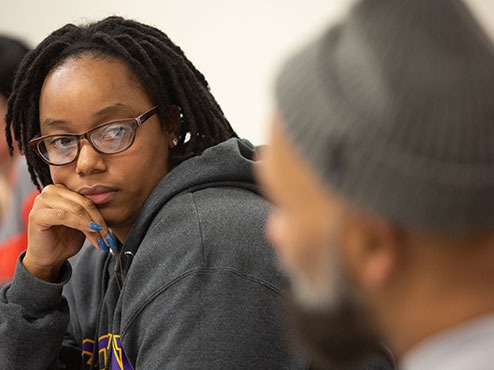

Traditional First Year Students and Traditional Transfer Students majoring in social work will take the BSW major courses online and may take all other courses in the traditional classroom setting.
Social work curriculum
BSW majors are required to take 18 credits of restricted electives as part of the 120 credits to graduate from Carlow with a BSW degree. The 18 credits of restricted electives must be chosen from a specific set of disciplines, for example, Criminology, Psychology, Social Work, and a few other disciplines. The BSW Program strongly encourages social work majors to pursue one of the concentrations rather than taking a random selection of credits. Concentration can provide a competitive edge for internships and/or the job market and provide the opportunity for a career path.
Healthcare Social Work
The Healthcare Social Work concentration provides the student with a conceptual, ethical, and practice framework for social work practice in health care. Emphasis is on an overview of the United States health care system, the unique knowledge and skill base of social work in health care, the biopsychosocial/spiritual impact of illness on patients and their family members and/or support system, and the special psychosocial needs of populations most often served in health-related social work. The introduction to biomedical ethics is provided as well as the fundamental medical terminology necessary for social work practice in health care. 11 required credits (4 courses) plus, already required prerequisites for the BSW major.
Courses in Concentration
SW298 Social Work Pathways in Healthcare – 3 credits
SW309 Social Work Practice in Healthcare – 3 credits
SW404 Grief and Loss Across the Lifespan – 3 credits
HIM102 Medical Terminology – 2 credits

Forensic Social Work
Nationwide, there is an interest in training social workers who can work within criminal justice systems in a wide array of forensic practices. Likewise, BSW programs offer credentialing at the undergraduate level that makes graduates more marketable, especially if they are interested in working on the non-law-enforcement side of criminal justice practice. This concentration provides social work students with a greater understanding of issues related to the justice system and the rehabilitation and prevention needs of the next decade. BSW graduates with this concentration will be able to promote themselves as early career professionals in the growing field of forensic social work. 18 credits (6 CRM courses) that complete the 18 credits of restricted electives that all BSW majors must complete.
Courses in Concentration
CRM100 Introduction to Criminology – 3 credits
CRM101 Introduction to Criminal Justice – 3 credits
CRM300 Crime and Mental Health – 3 credits
CRM250 Criminal Law – 3 credits
CRM412 Forensic Informed Treatment and Practice – 3 credits
CRM413 Testimony and Attorney Collaboration – 3 credits
New courses in development with Criminology Department: CRM 250-Fall 2025, 412-Spring 2026, 413-Fall 2026
*Students who wish to take a course(s) and are not a Forensic Social Work Concentration, may request to enroll in the course with permission from the CRM department chair/program director approval.
** Forensic Social Work Concentration Courses must be taken at Carlow University.

Crisis and Trauma
Studies in Crisis and Trauma provide a foundational focus ranging from immediate crisis assessment, intervention, and management through more specific issues such as child abuse prevention and treatment and partner violence, as well as investigating the impact of trauma for individuals and families. Concentration in Crisis and Trauma provides students with a solid foundation in theory and research pertaining to crisis, abuse and trauma. * Students are required to satisfy the requirements for the major and take the courses listed below. A minimum of six credits in Crisis and Trauma must be taken at Carlow University. 15 credits (5 courses) plus pre-requisite of 3 credits (1 course) which all BSW students must take for the major.
Courses in Concentration
Choose one of the following:
PY285 Introduction to Counseling – 3 credits
SW204 Theories and Methods of Direct Practice – 3 credits
Required:
PY/SW420 Impact of Trauma – 3 credits
PY/SW430 Crisis Intervention – 3 credits
PY/SW440 Child Abuse Prevention and Treatment – 3 credits
Choose one of the following:
PY/SW488 Intimate Partner Violence – 3 credits
PY/SW404 Grief and Loss Across the Lifespan – 3 credits
*Students who wish to take a course(s) and are not a Crisis and Trauma Concentration, may request to enroll in the course with permission from the department chair/program director approval.
** Minimum of six credits in Crisis and Trauma must be taken at Carlow University.

Restorative Justice
Studies in Restorative Justice provide a foundational focus in addressing community-based issues pertaining to inequities in the justice system as well as alternate methods for addressing crime-related issues beyond the typical incarceration models most often employed by the United States. Students are encouraged to consider how race and class affect interactions with the police and court systems. The concentration provides a solid foundation of theory, policy, and research to help students become active change agents as they enter the workforce. A minimum of 6 credits of these selected courses must be taken for a Restorative Justice concentration. These courses must be completed prior to the remainder of the concentration coursework. 12 credits (4 classes) plus 2 prerequisites (6 credits), a criminology pre-requisite, and a social work prerequisite which all BSW majors must take.
Courses in Concentration
Required:
SW216 Communities, Organizations in Praxis – 3 credits
CRM375 Race, Class and Justice – 3 credits
Choose one of the following:
CRM285 Violence and Victims of Crime – 3 credits
CRM300 Crime and Mental Health – 3 credits
CRM303 Prisons and Society – 3 credits
CRM315 Juvenile Delinquency – 3 credits
Students who wish to take a course(s) and are not a Crisis and Trauma Concentration, may request to enroll in the course with permission from the department chair/program director approval.
** Minimum of six credits in Crisis and Trauma must be taken at Carlow University.

Upon completion of selected courses, social work majors must proceed with an application process into the upper-level social work requirements. This process must be completed prior to registering for field placement. Every social work major is required to participate in a 450-hour agency-based field placement, as well as a corresponding classroom seminar.
Additional information is available in the University’s course catalog.
Career opportunities for Social work majors
Graduates find jobs as social workers, individual case managers, support group facilitators, victim advocates, child and family advocates, protective service workers, disability and aging advocates, residential case managers, and social services coordinators/administrators/directors.
Increased demand for health care and social services will continue to fuel the need for this occupation.
View the professional licensure disclosure for this program.
Advanced Standing Track
Graduates that earn the BSW degree from a CSWE-accredited program qualify for application for advanced standing in a CSWE-accredited program such as Carlow’s MSW Program. The Advanced Standing track allows for full-time students to complete the MSW degree at Carlow in as few as 18 months (39 credits).
Students who have earned an undergraduate social work degree from a Council on Social Work Education (CSWE) accredited program within the past 7 years qualify for advanced standing status. Advanced standing students can earn their MSW at Carlow by taking a minimum of 39- credits (an undergraduate GPA of 3.0 or above is required for advanced standing status).

Accreditation
The Bachelor of Social Work is accredited by the Council on Social Work Education (CSWE). CSWE’s Commission on Accreditation is responsible for developing accreditation standards that define competent preparation and ensuring that social work programs meet them. CSWE administers a multistep accreditation process that involves program self-studies, site visits, and reviews. Carlow University’s next accreditation visit will be in 2028.
Resources
- View or download the Bachelor of Social Work field manual [pdf]. It contains information and documents specific to the field placement component of the program
- View or download theBachelor of Social Work program handbook [pdf]. It contains policies, procedures and information about the program
- View or download theAssessment of Student Learning Outcomes [pdf].
Admission requirements and application process
- Submit an application for admission. It is free to apply.
- Request that official transcripts from all current and previous institutions you’ve attended are sent directly to the Carlow University Office of Admissions.
Apply
anytime
Start terms:
Fall, Spring & Summer
Social Work faculty
Kathryn Bonach, PhD, LSW, LPC Chair, Social Work Department, BSW Program Director, Professor
Marsha Frank, PhD, LCSW Associate Professor, Social Work (MSW)
Carrie Stott, PhD, LSW Program Director, Assistant Professor, Social Work (MSW)
Kenneth Smythe-Leistico, EdD, MSW, LSW Field Director, Associate Professor, Social Work (MSW)
Contact Admissions
If you are interested in this major, our Admissions team is available to help you with the next steps, including scheduling an on-campus visit or attending an upcoming event.
Understanding humanity: History minor
You can supplement your interest in learning about the past with a History minor. You will uncover the value of history through research of recorded events, analysis of patterns and critical thinking in order to present the past, better understand contemporary problems and predict future challenges.
A minor in History is a perfect addition to comprehensive Liberal Studies and English majors.
History minor curriculum
This minor is open to any major. A minimum of 18 credits is required.
You will choose from the following courses:
- World Culture
- History of the United States to 1865
- History of the United States since 1865
- Introduction to United States Labor History
- Western Culture
- Irish-American History
- Boy Cultures
- African-American History
- American Constitutional History
- Visions of the Future: Utopia/Dystopia/Science Fiction
- Multiculturalism in U.S. History
- Popular Culture
- Girl Cultures
Minor in Behavioral Health
In the Behavioral Health minor program, you will learn about the social work profession as you study the connection between behaviors and mental and physical well-being. You will learn how to develop cultural competence in working with diverse populations, explore the individual and community context of behavioral health, and learn about case management.
The minor is open to all majors. It particularly benefits students who pursue careers in social and behavioral sciences, political science, psychology, anthropology and sociology.
A Behavioral Health minor enriches all career choices. With this minor, you will be prepared to work in behavioral health organizations and in settings where behavioral health impacts clients and communities, such as in health care, education, criminal justice and advocacy.
Behavioral Health Minor curriculum
The minor required 18 credits. Two elective courses focus on topics such as practice with groups and families, crisis intervention and substance abuse. The forensic context will further prepare you to work in these areas.
Courses include:
- Human Behavior and the Social Environment
- Cultural Awareness for Human Service Personnel
- Social Work with Individuals
Find your social and behavioral sciences degrees at Carlow
Carlow University offers a variety of social and behavioral science degree programs to prepare you for a career in social work or counseling. You will develop social work skills that can be translated into practice with individuals, families, organizations and communities, and learn the theories of human behavior related to how personality, environment and culture interact with one another to shape an individual.
Program Name
Offered
Degree Earned
Minor in Neuroscience
You can expand your physical science major with a minor in neuroscience. You will study how the functions and mechanisms of the nervous system affect behavior in animals and humans in conjunction with your major studies in biology, chemistry or psychology.
Behavioral Neuroscience Minor Curriculum
This minor is designed for students not majoring in Behavioral Neuroscience and is open to any major. A minimum of 21 credits is required;10 must be taken at Carlow University.
Required Courses Include:
- Introduction to Psychology
- Foundations of Molecular and Cell Biology
- Biological Bases of Behavior
- Cognitive Psychology
- Neuroanatomy
- Neurophysiology
Learn to understand the relationship between brain and behavior
Earn a Behavioral Neuroscience degree in the neuropsychology track
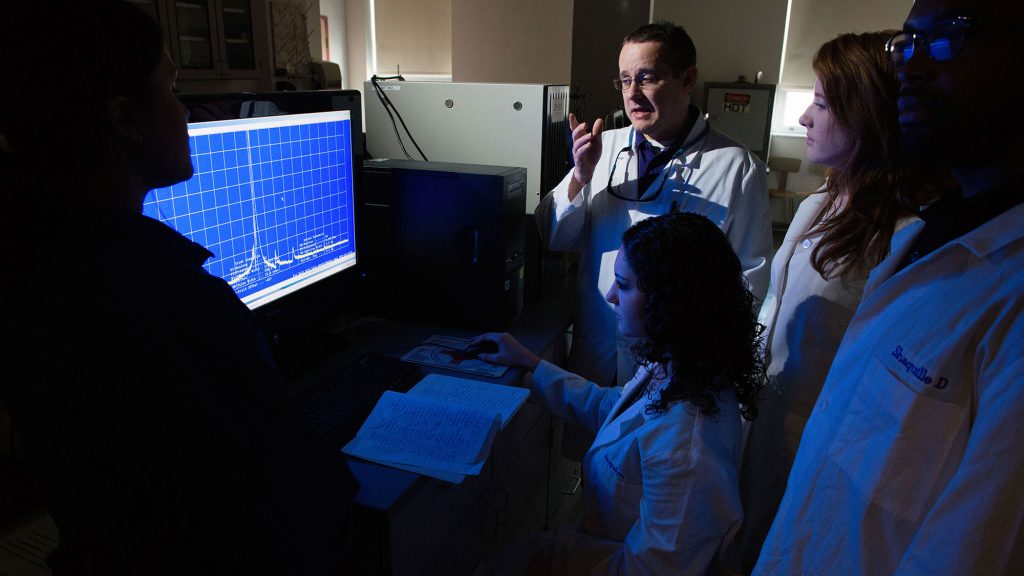
The neuropsychology program will give you new insights into how the brain thinks, reasons, formulates and processes.
You will be prepared to work in neuropsychology and clinical psychology, where neuropsychological assessments are an important part of clinical work. With the behavioral neuroscience degree, you will gain knowledge of the biological and physiological mechanisms that drive the nervous system and better understand the relationship between the brain and behavior.
The Behavioral Neuroscience major is an interdisciplinary program that builds on the strengths of Carlow University’s biology, psychology and chemistry programs.
Degree:
Bachelor of Science
Delivery:
On campus, some online
Campus:
Oakland
Transfer credits:
Up to 90 credits
Neuroscience degree curriculum
Carlow’s neuroscience program allows undergraduates to take courses in neuropsychology as well as to learn under scholar-practitioners. The curriculum includes a genetics course in which students investigate the maintenance, inheritance, transfer and expression of genetic information at the molecular, cellular, organismal and population levels. The cognitive psychology course explores its basic concepts and contemporary topics, such as will perception, attention, pattern recognition, consciousness, memory, the representation of knowledge, language, cognitive development, thinking and artificial intelligence.
Quick facts
- Gain hands-on learning experiences
- Leverage Carlow’s relationships with nearby research centers
- Be prepared for graduate work in psychology and neuropsychology
- Start taking Master’s courses as an undergraduate and earn a graduate degree faster for less money
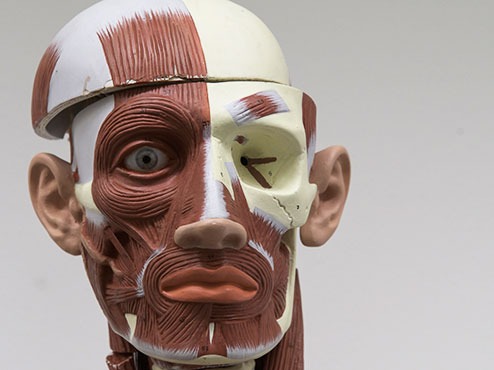
Alternate degree completion option
3-Year Degree
Finish your bachelor’s degree in three years by following a 3-year academic plan. Courses are taken across fall, spring and summer terms with summer courses completely online. When applying, indicate your interest in the 3-Year Degree option.
Accelerated
Fast track your way to a master’s by taking graduate courses as an undergraduate student. Course credits count toward both degrees. Apply for the accelerated option after your sophomore year.
Career opportunities for neuropsychology
Graduates often find jobs assisting in mental health settings, such as psychiatric technicians. They also prepare for training that can ultimately lead to a career in clinical psychology.
Jobs in this profession are expected to grow about 3% from 2019 to 2029, according to the U.S. Bureau of Labor Statistics.
Admission requirements and application process
- Submit an application for admission. It is free to apply.
- Request that official transcripts from all current and previous institutions you’ve attended are sent directly to the Carlow University Office of Admissions.
Apply
anytime
Start terms:
Fall, Spring & Summer
Behavioral Neuroscience faculty
Kathryn Bonach, PhD, LSW, LPC Chair, Social Work Department, BSW Program Director, Professor
Marsha Frank, PhD, LCSW Associate Professor, Social Work (MSW)
Carrie Stott, PhD, LSW Program Director, Assistant Professor, Social Work (MSW)
Kenneth Smythe-Leistico, EdD, MSW, LSW Field Director, Associate Professor, Social Work (MSW)
Contact Admissions
If you are interested in this major, our Admissions team is available to help you with the next steps, including scheduling an on-campus visit or attending an upcoming event.
Understand why people break the law and the reasons for their behavior
With a bachelor’s in Criminology, you will learn the nature of crime and the effectiveness and fairness of society’s efforts to prevent and control it.
You will engage in a cross-disciplinary approach to the study of crime, offenders and victims, as well as the agencies, laws, policies and processes of the criminal justice system. You will train to become an agent of change by developing critical thinking skills through problem-based learning in order to impact the fields relevant to criminology professionals regardless of setting.
A psychology concentration is embedded within the program to ensure that you have the knowledge relevant to direct-practice professions in the field. This emphasis on psychology will help you develop an awareness of the critical role mental health plays in criminal behavior.

Degree:
Bachelor of Arts
Delivery:
On campus, some online
Campus:
Oakland
Transfer credits:
Up to 90 credits
Criminology major curriculum
Carlow University’s major in Criminology focuses on prevention and remediation strategies. Notable courses include Crime and Mental Health and Race, Class and Justice.
Quick facts
- Pair studies with additional minors in Pre-Law, Counseling, or Crisis and Trauma
- Enjoy flexible options for degree completion for non-traditional students and those outside of the region
- Benefit from internship opportunities

Alternate degree completion options
Online Degree
Gain the knowledge you need at your convenience with our online degree option. When applying, indicate your interest in the online option.
3-Year Degree
Finish your bachelor’s degree in three years by following a 3-year academic plan. Courses are taken across fall, spring and summer terms with summer courses completely online. When applying, indicate your interest in the 3-Year Degree option.
Accelerated
Fast track your way to a master’s by taking graduate courses as an undergraduate student. Course credits count toward both degrees. Apply for the accelerated option after your sophomore year.
Career opportunities for Criminology graduates
Criminology graduates are prepared for careers in local, federal and international law enforcement, adult and juvenile corrections and probation, and prevention and rehabilitation services. Many students pursue psychology and criminal justice-related graduate programs and law school.
Admission requirements and application process
- Submit an application for admission. It is free to apply.
- Request that official transcripts from all current and previous institutions you’ve attended are sent directly to the Carlow University Office of Admissions.
Apply
anytime
Start terms:
Fall, Spring & Summer
Criminology faculty

Joseph Roberts, PhD Professor, Department Chair, Program Director of MA in Psychology and MS in Criminology & Criminal Justice
Mary C. Burke, PhD Professor, Program Director
Contact Admissions
If you are interested in this major, our Admissions team is available to help you with the next steps, including scheduling an on-campus visit or attending an upcoming event.
Learn about crime theory with a minor in Criminology
If you are interested in studying issues such as the systems and administration of justice, crime theory, and the intersection of mental health and deviant behaviors, you can elect to minor in Criminology.
In this scientific study of crime and criminals, you will examine why crime exists, its effects on society and the environment, and how to prevent or reduce criminal activity.
Criminology minor curriculum
This minor is open to any major. A minimum of 18 credits is required.
Required courses include:
- Criminology
- Criminal Justice
- 4 criminology electives
Learn fraud prevention, fully online: MS in Fraud and Forensics
Acquire in-demand, up-to-date skills in Carlow University’s IACBE-accredited online Master of Science in Fraud and Forensics. One of the first of its kind in the nation, the program is consistently ranked as one of the top forensic accounting programs.
Accreditation
The College of Arts and Sciences Department of Business Management, Accounting, and Ethics at Carlow University has received specialized accreditation for its business programs through the International Accreditation Council for Business Education (IACBE) located at 11374 Strang Line Road in Lenexa, Kansas, USA.
For a list of accredited programs and retention information, see Accreditations.
© Copyright 2024 Carlow University. All rights reserved.
Carlow University prohibits sex discrimination in any education program or activity that it operates. Individuals may report concerns or questions to the Title IX Coordinator, Carissa Monaco at titleix@carlow.edu or 412-578-6050.