At Carlow University, the next generation of ethical leaders is already in the making.
Here, our students gain more than just a degree – they build connections, find purpose, and thrive – working in ways big and small to reshape the future. With your support, we can continue to invest in these future leaders and expand their ability to transform our world.
How You Can Support
At Carlow University, the next generation of ethical leaders is already in the making.
Here, our students gain more than just a degree – they build connections, find purpose, and thrive – working in ways big and small to reshape the future. With your support, we can continue to invest in these future leaders and expand their ability to transform our world.
How You Can Support
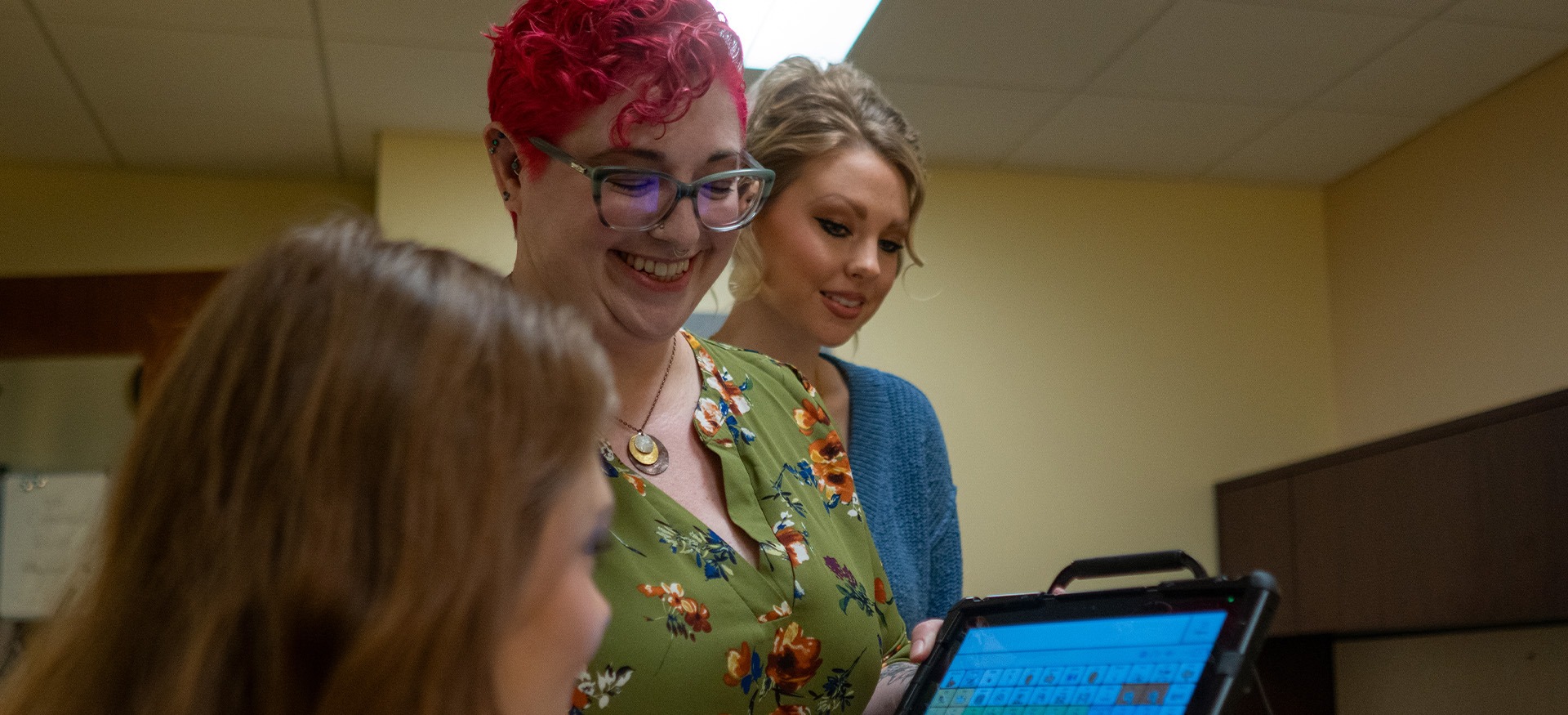
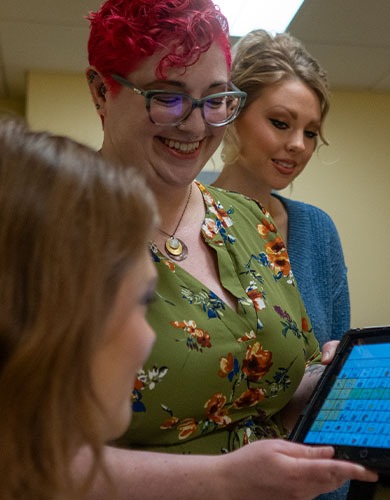
The Speech-Language Pathology (SLP) Clinic at Carlow University is a no-cost, community-centered clinic devoted to providing high-quality care for children and adults with communication needs. As the only pro-bono SLP clinic in Pittsburgh and surrounding areas, we are proud to serve our neighbors in Oakland and the greater Pittsburgh community with compassion, dignity, and a commitment to healing.
All services are delivered by graduate student clinicians enrolled in Carlow’s Master of Science in Speech-Language Pathology program. Students are supervised by state-licensed, nationally certified faculty members who are deeply committed to mentoring the next generation of ethical healthcare leaders.
Our outpatient clinic offers in-person, virtual, and group therapy sessions tailored to individual needs. Free accessible parking is available on-site, ensuring our services are as welcoming and inclusive as the care we provide.
At Carlow, we believe communication is a human right—and helping others find their voice is sacred work.
Not sure where to start? Explore how we support communication across a variety of areas—from social connection and literacy to fluency, speech sounds, and voice care.
Your donation helps fund SLP student scholarships, clinical training, and innovative learning opportunities.
Donate TodayYour donation helps fund SLP student scholarships, clinical training, and innovative learning opportunities.
Donate Today
Our clinic is proud to be led by a team of dedicated faculty supervisors who bring years of clinical expertise and a passion for mentoring future speech-language pathologists.
At Carlow, we believe that mentorship is a form of healing. Our supervisors guide graduate student clinicians while modeling compassionate, ethical, and person-centered care.
Together, we ensure every client receives high-quality services—while shaping the next generation of SLPs. Meet the faculty who help bring that mission to life.
Carlow University’s Speech-Language Pathology Clinic prohibits and will not engage in discrimination or harassment on the basis of race, color, religion, sexual orientation, disability, sex, age, pregnancy, ancestry, national origin, place of birth, genetic information, gender identity, veteran status, or any other category protected by federal, state, or local law.
Amy Bernett
Allegra Cornaglia
Samantha Dalessio
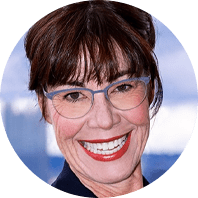
Jaqueline Gartner-Schmidt
Elizabeth Haley
Megan Nanna
Jessica Reyes
Amanda Smith
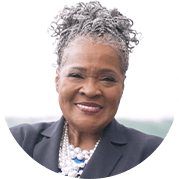
Dr. Kathy Wilson Humphrey, PhD, is Carlow University’s 11th president, (and the 10th of 12 siblings!) and is well known and loved for her 35+ years of visionary leadership in higher education. She’s all about inclusion, equity, and empowering students, drawing from her own journey as a PELL grant recipient. Dr. Humphrey envisions Carlow as a place of innovation and support, where everyone—faculty, staff, and students—can thrive, both academically and personally. Words she lives by: “Start first with your own family, then move to your community, and then go out and make a difference in the wider world.”
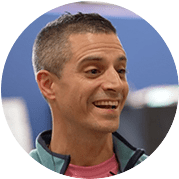
Before he led one of Pittsburgh’s most transformative youth arts organizations, Justin Mazzei was a kid who found clarity in creating things. He remembers a latch-hook pillow project in grade school being the first time a hands-on process made him feel calm, focused, and proud. Later, in a Catholic school classroom, he colored an elephant pink. A teacher known for being particularly strict suddenly lit up, praising the originality of his work.
“Somebody took a moment to really see me,” he says. “That kind of recognition stays with you.”
Art became a source of peace, identity, and possibility. It was something stable at a time when he didn’t always feel grounded. When he began exploring paths after high school, two interests kept rising to the top: mentorship and making art. Art education felt like a way to hold both.
Carlow University stood out immediately. It was small, relational, mission-driven, “a place that felt like home before I even stepped on campus,” he recalls. Once he arrived, the experience deepened. His professors showed him what compassionate, high-level mentorship could look like in the arts. They opened his world to creative expression, craft, interdisciplinary thinking, and the belief in art as a way of understanding yourself and the people around you.
A classmate eventually told him about a place he’d never heard of: Manchester Craftsmen’s Guild. “He said it was like Disney World, but real,” Justin laughs. When he walked in for the first time, he felt that same childhood spark, but bigger. Here was a space where young people could create, belong, and grow alongside practicing artists.
“I didn’t know a place like that could exist,” he says.
Justin began volunteering at MCG more than 15 years ago. One role led to another—studio assistant, teaching artist, coordinator, programming director—until eventually he became Executive Director. Through it all, his philosophy has stayed the same: art is a doorway. It builds confidence. It builds community. It builds hope.
“Walking in here every day feels like a privilege,” he says. “I get to help young people experience the same spark that once changed my life.”
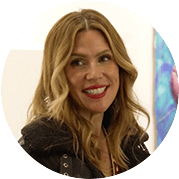
As a child, Marissa McClure Sweeney always felt like she saw the world a little differently. Adults noticed it too. They encouraged her to express that difference through drawing, making, and imagining—long before she understood that this way of seeing was its own kind of artistry.
“I always wondered if other kids felt this way,” she recalls. “I wanted to meet them, hear their ideas, understand how they thought.”
One elementary school teacher in particular changed everything. She recognized Marissa’s vision and began bringing her into studios, introducing her to working creators, even taking her to see architectural models being built.
“They talked to me like another artist,” Marissa says. “Even though I was in third grade.”
That early respect shaped her entire career. She vowed to take children’s ideas seriously, to meet them at eye level, and to create spaces where their thinking was valued.
Everything shifted again when she became a parent. Instead of teaching children as a professional standing apart, she began making art with her own kids side by side, like peers. “What could we make together?” she wondered. That question sparked years of exploration that led to a community-based studio program, international collaborations, a book, and eventually an exhibition.
Her work centers on a central idea: making visible the creative and intellectual labor of children, which is often hidden, underestimated, or dismissed.
“Children should be included in the conversations that affect them,” she says. “Their voices carry weight, and we need to treat them as full participants in our shared world.”
She believes that cultural spaces should be inclusive, conversational, and alive rather than silent reliquaries.
Outside the studio, Marissa finds grounding in the rhyt
Amy Bowman-McElhone’s story with Carlow began long before she ever curated an exhibition or taught a class. Two of her great-great-aunts were among the earliest Mount Mercy students in the 1930s; immigrant women who worked in the care professions and found opportunity, dignity, and belonging in Carlow’s mission. One studied nursing and became the inaugural editor-in-chief of the student newspaper. Another pursued social work.
“Carlow has been shaping my family for nearly a century,” Amy says. “Coming back here feels like the story coming full circle.”
Her own path took root in a place that felt just as formative: the Carnegie Museum of Natural History. In fifth grade, her class spent a week exploring the museum’s iconic dioramas. She remembers the uncanny stillness of those scenes. The crafted water and frozen figures transported her to a different world. During the field trip, each of the children were tasked with creating a work of art inspired by what they experienced. When Amy’s was selected to hang in the museum’s education hallway, something clicked.
“The museum felt electric to me,” she recalls. “Even as a kid, I knew I wanted to be part of spaces that could move people.”
In college, it was a required design-history course that shifted everything. Suddenly, the analytical, narrative, and visual parts of her brain aligned. “Everything clicked,” she says. She pivoted to a new major in art history and never looked back; earning her MA, curating university galleries, pursuing a PhD, and eventually directing a museum in Florida. But over time, she felt herself drifting from the work she most cared about: students, artists, and art itself. Carlow offered a way back to that center.
“At Carlow, the mission comes first,” she says. “Representation, care, hospitality—those values are centered in everything we do.”
Her passion for contemporary art is rooted in what it can do: spark curiosity, shift perspectives, and open people to one another. “Art moves hearts and minds,” she says. “To create social change, people first need to feel connected.”
Outside of work, Amy spends her time hiking and biking with her family, flipping through vinyl bins, and perfecting her coffee rituals. For her, these are grounding practices that keep her connected to the wonder she helps her students cultivate every day.
Dr. Rhonda Maneval was a veteran nurse moving steadily toward hospital administration when a former professor called, asking if she could step in as an adjunct. “I was very flattered,” she said. “But I thought, where am I going to fit this in my schedule?”
She made it fit, and everything changed.
Standing on the unit with a group of nursing students, she felt something shift. “I realized that if I moved into teaching, I could influence the practice of thousands of nurses,” she said. “Taking care of one patient at a time is incredibly impactful, but I could multiply the good by becoming an educator.”
That moment showed her that teaching wasn’t a detour from patient care. It was patient care, but on a different scale. The joy she found in guiding and healing families expanded into guiding future nurses toward careers of skill, purpose, and compassion. “No matter where you are in nursing or the healthcare space, you have an opportunity to make a difference every day,” she said. “What we do is extraordinarily powerful, and we don’t realize it most of the time.”
Forty years into her nursing career, Rhonda says her “North Star” still drives her: a commitment to values, ethics, and transformative work that strengthens communities. “That’s one of the reasons I’m here at Carlow,” she said. “Our mission aligns with who I am and what I want to do with my life.”
Her dedication extends beyond the classroom. As her parents age into their mid-80s, Rhonda remains fiercely devoted to their wellbeing. It’s an extension of the same instinct she felt as a child, when she lingered after kindergarten to help classmates with their boots. “My heart was always there,” she said. “It’s the joy of helping others, and for many of us, it starts very young.”
During the earliest days of the COVID-19 pandemic, Dr. Janice Nash felt an instinct she couldn’t ignore: the pull back to the bedside. “I was ready to walk out the door and say, ‘I’m here 7A to 7P,’” she said. But every morning, she reminded herself that keeping Carlow’s nursing students on track would have an even broader impact. “I had to tell myself that helping them move forward was how I could help the most.”
That tension, between caring for patients directly and preparing the next generation to do the same, has informed Janice’s whole career. She came to nursing because she loved science and “wanted to help people,” but it was teaching that revealed her deeper calling. “I realized how much I loved guiding new nurses,” she said. “Helping them understand not just the how, but the why.”
Now more than twenty years into teaching at Carlow, Janice is continually reminded of the reach of that work. “I run into former students in hospitals, in grocery stores... everywhere,” she said. “They’ll tell me, ‘Don’t you remember? I failed that test, and you told me it was going to be OK.’ Those little interactions matter more than they know.”
Recently, when asked to estimate how many students she has supervised or taught over her career, the number surprised even her. “Fifty graduate every year… that’s about a thousand students I’ve touched in some way,” she said with a laugh. “No wonder I can’t remember every name instantly.” But the stories stay with her: the students who doubted themselves, the ones who came back years later to say thank you, and the many now leading with the same steady reassurance she once offered them.
“It’s the joy of helping others,” Janice said. “And sometimes we don’t realize the impact we’re having until years later.”
Dr. Kunal Bhanot’s path to physical therapy didn’t begin with a childhood dream. It began with a story carried forward through his family. Growing up in India, access to healthcare education was limited, and physical therapy was still a young profession. Kunal had always been strongly encouraged to become a doctor; a hope passed down from his mother, who once dreamed of medical school herself. But it wasn’t until he visited a new spinal cord rehabilitation hospital that he discovered what healing could look like beyond medicine. He watched therapists standing in a warm-water pool, helping patients move again, sometimes for the first time in months.
“That day opened a whole new world to me. I didn’t know this profession existed, but I knew immediately it fit who I am.”
He went on to earn his physical therapy degree, then came to the United States for advanced training. Along the way, he realized that what drew him to PT was the belief that healing involves presence, dignity, and time. His career became rooted in rehabilitation, and eventually in teaching, where he could share not just clinical skills, but a philosophy of care. Today, he leads Carlow’s Doctor of Physical Therapy program, shaping practitioners who lead with empathy as much as expertise.
Kunal describes his professional path as guided by an invisible hand: “We make all the plans we want, but God takes us where we’re meant to go. I thought I was choosing a career, but this career was choosing me.”
Ken Smythe-Leistico didn’t begin his academic journey expecting to work in social services. He originally majored in accounting, until he noticed a pattern: “People often came to me to talk through their problems, to see things from a different perspective. That’s when I realized this was where I was meant to be.”
A formative summer working with youth completing community service reshaped how he understood compassion. He went in expecting to teach or guide and instead learned the power of presence, dignity, and listening. The experience revealed how profoundly a small act of grace can alter a life’s direction. At Carlow, Ken helps students prepare to enter professions where empathy is a form of courage. He describes his work now as paying forward the same steadiness that others once offered him.
Outside of work, Ken is often in the kitchen: “Cooking is how I transition from work Ken to home Ken,” he said. “It’s where I process the day and reconnect with my family.” He often cooks alongside his daughter, experimenting, adjusting, and layering pieces until they become something whole, much like the work of helping others move toward healing.
Mickenna Ansell grew up in Mercer County, PA, where access to medical and therapeutic care wasn’t always guaranteed. She remembers families, people she knew and loved, having to choose between the electric bill and a prescription refill.
“I knew early on that I wanted to do something with underserved communities, even before I knew I wanted to go into psychology.”
A single eight-week psychology class in high school changed the direction of her life. It was the first time she learned about resilience, neuroplasticity, and how healing can be supported through care and community. She followed that thread through advocacy work, inpatient behavioral health settings, and into her doctoral program, where she found the perfect intersection of compassion and community practice.
Today, Mickenna works with children and families in settings where trust, encouragement, and belonging matter deeply. Her work is fueled by the same belief that shaped her early life: that everyone deserves a chance to feel seen, supported, and able to grow.
Outside of work and her doctoral studies, she decompresses through music, audiobooks, and creativity. She’s almost always joined by her two cats, Figaro and Repete, and her dog Molly. Her pets have been with her through years of classes, commutes, and study sessions.
“At this point they should probably receive honorary degrees,” she says. “They’ve been through every course I’ve taken.”