-
Give

At Carlow University, the next generation of ethical leaders is already in the making.
Here, our students gain more than just a degree – they build connections, find purpose, and thrive – working in ways big and small to reshape the future. With your support, we can continue to invest in these future leaders and expand their ability to transform our world.
How You Can Support
At Carlow University, the next generation of ethical leaders is already in the making.
Here, our students gain more than just a degree – they build connections, find purpose, and thrive – working in ways big and small to reshape the future. With your support, we can continue to invest in these future leaders and expand their ability to transform our world.
How You Can Support
A Case Study of Carlow’s Dyslexia Program
Since 2021, the Peirce Dyslexia Center at Carlow University has been at the forefront of addressing the nation’s literacy crisis. By training dyslexia practitioners in structured literacy and providing targeted tutoring to hundreds of children, the Center has created life-changing educational outcomes—both for students and for the educators who serve them.
The Challenge
According to the International Dyslexia Association (IDA), 15–20% of the population struggles with aspects of reading acquisition. Although all brains learn to read by developing the same neural pathways, those with dyslexia experience disruptions in this process. Through structured, evidence-based instruction, these barriers can be overcome—but only with intentional, sustained effort.
“Two-thirds of our nation’s fourth and eighth graders read below proficiency. It’s been this way for decades. We, as a system, must look more closely at our instructional methods, curricular resources, and scope to ensure our education approach is evidence-based and aligns with what we know about how the brain learns to read. Only then can we ensure all—not just some—achieve full literacy.”
— Valerie Piccini, Director of Carlow’s Reading Specialist Program
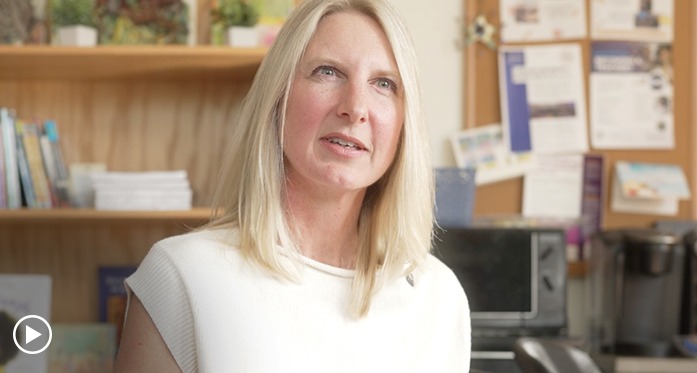
The Solution
Founded in 2021 at The Campus Laboratory School, the Peirce Dyslexia Center was created to support children with dyslexia and language-based learning differences. It offers scholarships for after-school tutoring and summer literacy programs, along with educator scholarships for Carlow’s graduate-level dyslexia certificate program.
Carlow’s dyslexia training—aligned with IDA standards—emphasizes structured literacy and is designed to bridge the persistent gap between research and practice.
“Our school actively strives to ensure all students receive the diagnostic, structured, and multimodal education they need to become successful readers,” said Sarah Sora, director of the Dyslexia Center and Learning Lab. “We deliberately shape our classroom instruction using scientific, research-based approaches. With our Dyslexia Center, we’ve seen real success in closing learning gaps and helping students grow into confident, proficient learners.”
Teacher training is at the heart of the program’s impact. As Dr. Louisa Moats reminds us in her seminal work Speech to Print, “Programs don’t teach—teachers do.”
Without deep knowledge of the science of reading, even the best materials fall short. Carlow prioritizes this knowledge, preparing educators who can truly transform classrooms.
Impact by the Numbers
42
graduate scholarships awarded for the Dyslexia Certificate Program
($322,000 in scholarship funding)
102
children received scholarships to attend Camp Carlow, the summer dyslexia camp
181
students participated in after-school tutoring
5
school-based tutoring sites established
900+
educators engaged in professional development through Carlow
Program Supporters
- Robert and Joan Peirce Family Foundation
- Irene Shea Foundation (supporting the Sister Mary Paul Hickey Educator Project)
More Than a Scholarship Program
The Peirce Dyslexia Center is more than a funding initiative—it is a comprehensive intervention model that reshapes how we support children and train educators. Its reach extends well beyond the Campus Laboratory School and into the broader community through:
- Dyslexia screenings and simulations
- Evaluation and identification services for families
- Community-accessible literacy workshops
- Conferences featuring nationally recognized dyslexia experts
- Support for after-school tutoring initiatives
- Camp Carlow summer programs for children with dyslexia
- Early literacy integration with Carlow’s Early Childhood Apprenticeship Program
A Scholar’s Perspective
“I selected Carlow University because the Reading Specialist Master’s program is accredited by the International Dyslexia Association. Carlow stood out in its emphasis on dyslexia and the science of reading.
I began this journey because so many of my high school students were reading far below grade level—and yet they still had dreams and goals like anyone else. I felt unequipped to give them the intensive instruction they deserved. Carlow gave me the tools I needed to be part of the change.”
— Sophie Moutis, Peirce Scholarship recipient and Reading Specialist graduate student
© Copyright 2026 Carlow University. All rights reserved.
Carlow University prohibits sex discrimination in any education program or activity that it operates. Individuals may report concerns or questions to the Title IX Coordinator, Jackie smith at jmsmith@carlow.edu or 412-578-6050.