
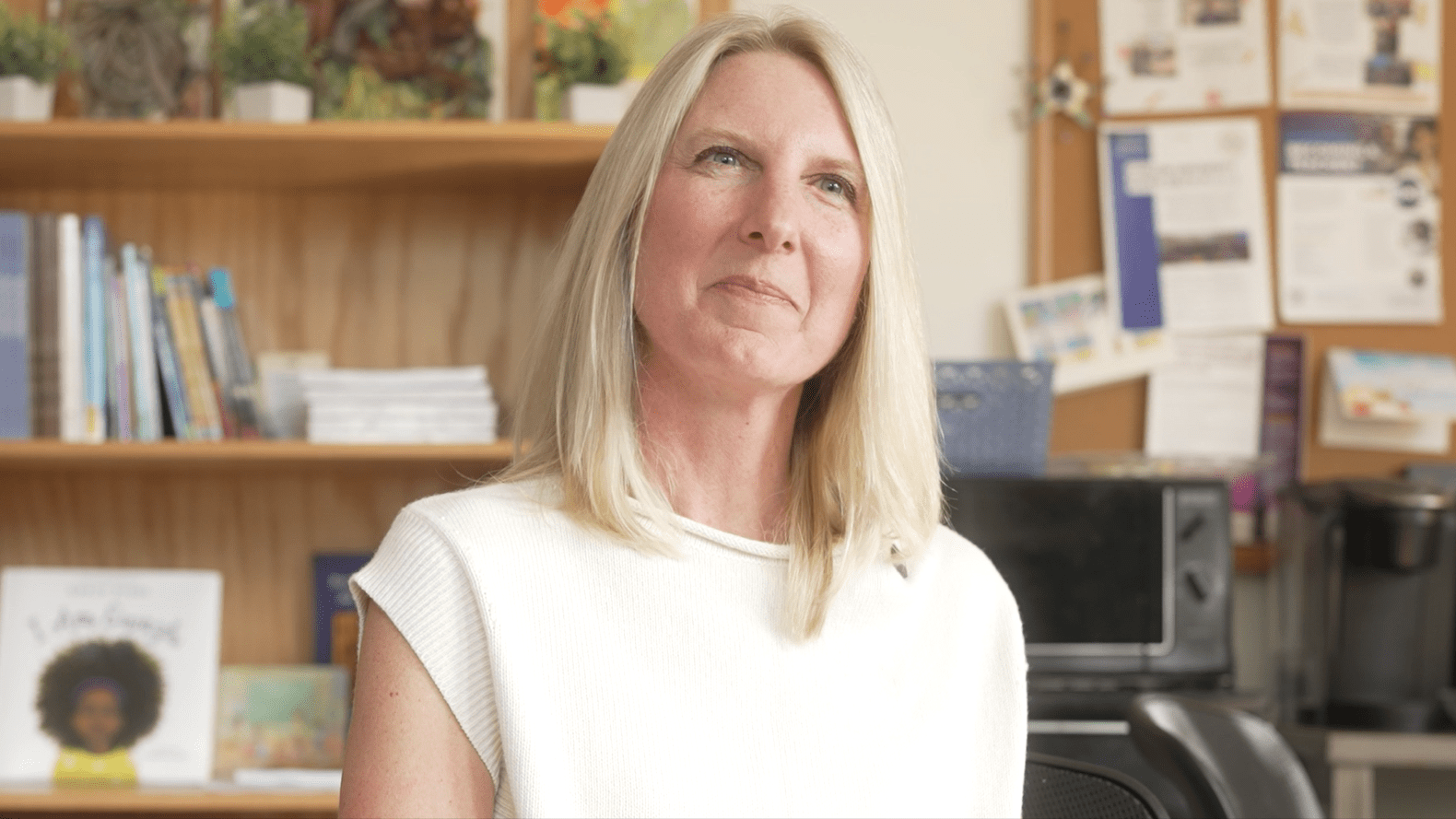
Valerie Piccini, MEd, has spent her career making sure every student has a shot at literacy—and every teacher has the tools to get them there. After more than two decades in public education, she came to Carlow University in 2019 to build something bold: a graduate program that puts the science of reading into the hands of educators before they enter the classroom.
Now the director of Carlow’s MEd in Reading Specialist program, Piccini brings deep expertise, hard-won insight, and a sense of urgency to the national reading crisis. At Carlow, she designed a curriculum aligned with structured literacy and International Dyslexia Association standards—training future teachers in methods that are evidence-based, effective, and inclusive. She’s also a National LETRS facilitator, working with thousands of educators across the country, and a fierce believer in the power of knowledge to change lives.
In her own words, Val shares what brought her to Carlow, what sets the program apart, and why teaching reading is, in her view, the most meaningful work there is.
What made you decide to leave public education and instead teach future teachers?
“We have two-thirds of our nation’s fourth and eighth graders reading below proficiency. As a reading specialist in public education, we were using practices that were actually in direct misalignment with how poor readers learn to read. There needed to be a change. […] I was hired at Carlow to write the MEd Reading Specialist program and fully align it to International Dyslexia Association and structured literacy competencies. That’s what we do here—we teach teachers with evidence-aligned practices so they can teach all students to read and write proficiently.”
Why does accreditation matter so much in this field?
“A lot of universities are finding themselves in a position where states are now requiring them to align coursework to structured literacy competencies. Here at Carlow, we’re already aligned. We’re already accredited. […] Our teachers come to Carlow seeking that alignment, that accreditation, that affirmation that their investment is going to pay off—for their students.”
Was it surprising to realize how widespread the reading gap really is?
“I went to school for my master’s in reading with disabilities about 25 years ago. […] You’d think when you graduate with your master’s in that field, you’d be able to teach students who struggle to read. That was not the case. It was a very long journey to get to the practices that really work. […] Literacy is an equity issue. And my passion lies in turning this ship around—at the root, at the university—so we’re not graduating teachers without the ability to teach reading.”
What kind of students are drawn to Carlow’s program?
“Students that enroll here at Carlow are looking for evidence-aligned teaching practices—and for a community where they can learn. I tell my students, ‘Don’t do anything for me. Do it for you.’ […] Because everything we teach here is practitioner-oriented, students are constantly turning their learning into real impact in the field. Once people come to Carlow, they don’t leave.”
Why does teaching reading matter so much to you?
“Teaching students to read and write is the worthiest work in the world. You can’t do anything without literacy. We have our students in our care for 13 years, and we often graduate them as illiterate members of society. […] Going into education—going in with the passion that you’re doing worthy work—there’s no better job.”