Art has a way of inviting us to pause, look closer, listen deeper, and notice what we’d otherwise ignore. In Episode Two of A More Merciful World, we step inside the lives of three artists and educators who use that pause to spark something bigger: connection.
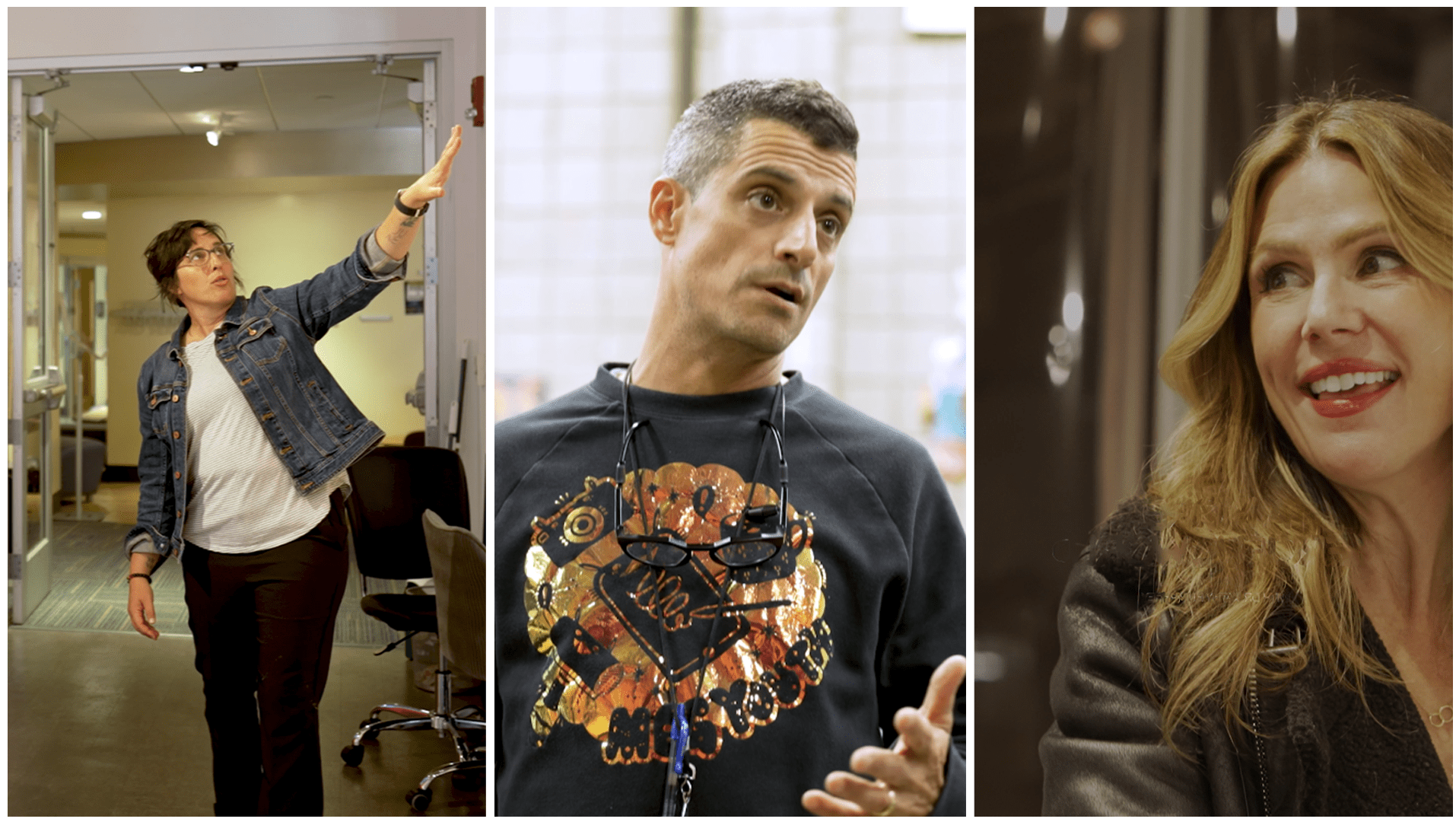
This month, we’re spotlighting three voices whose work shows how art can change lives from childhood through adulthood: a curator whose family story winds through nearly a century of Carlow history, an alumnus leading one of Pittsburgh’s most vibrant youth arts spaces, and a scholar-artist illuminating the intellectual depth of children’s creative work. Each brings a different lens on what art can do in the world.
Meet the storytellers, teachers, and makers at the heart of “The Art of Social Change.”
Amy Bowman-McElhone, PhD
Amy Bowman-McElhone’s story with Carlow began long before she ever curated an exhibition or taught a class. Two of her great-great-aunts were among the earliest Mount Mercy students in the 1930s; immigrant women who worked in the care professions and found opportunity, dignity, and belonging in Carlow’s mission. One studied nursing and became the inaugural editor-in-chief of the student newspaper. Another pursued social work.
“Carlow has been shaping my family for nearly a century,” Amy says. “Coming back here feels like the story coming full circle.”
Her own path took root in a place that felt just as formative: the Carnegie Museum of Natural History. In fifth grade, her class spent a week exploring the museum’s iconic dioramas. She remembers the uncanny stillness of those scenes. The crafted water and frozen figures transported her to a different world. During the field trip, each of the children were tasked with creating a work of art inspired by what they experienced. When Amy’s was selected to hang in the museum’s education hallway, something clicked. “The museum felt electric to me,” she recalls. “Even as a kid, I knew I wanted to be part of spaces that could move people.”
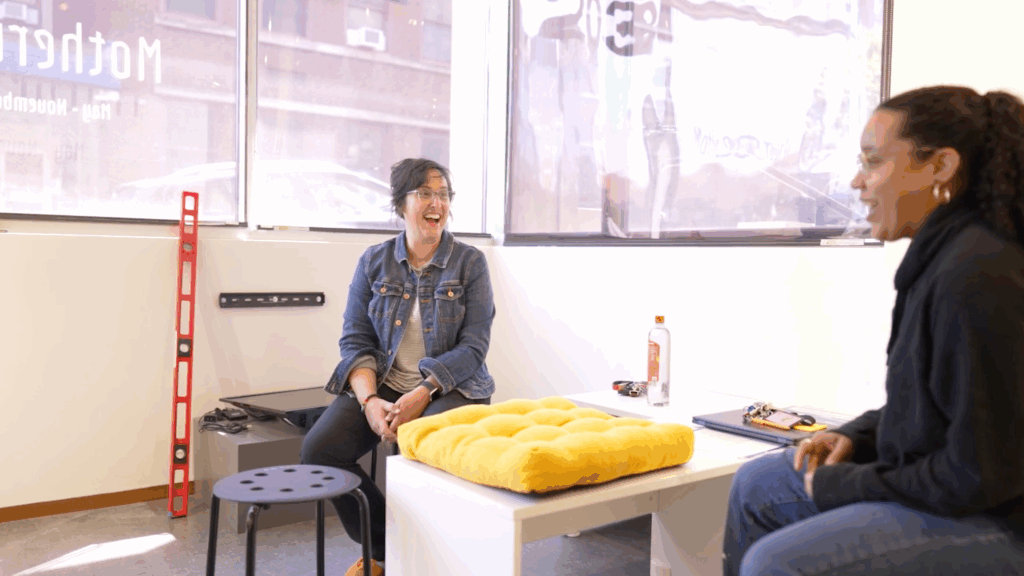
In college, it was a required design-history course that shifted everything. Suddenly, the analytical, narrative, and visual parts of her brain aligned. “Everything clicked,” she says. She pivoted to a new major in art history and never looked back; earning her MA, curating university galleries, pursuing a PhD, and eventually directing a museum in Florida. But over time, she felt herself drifting from the work she most cared about: students, artists, and art itself. Carlow offered a way back to that center.
“At Carlow, the mission comes first,” she says. “Representation, care, hospitality—those values are centered in everything we do.”
Her passion for contemporary art is rooted in what it can do: spark curiosity, shift perspectives, and open people to one another. “Art moves hearts and minds,” she says. “To create social change, people first need to feel connected.”
Outside of work, Amy spends her time hiking and biking with her family, flipping through vinyl bins, and perfecting her coffee rituals. For her, these are grounding practices that keep her connected to the wonder she helps her students cultivate every day.
Justin Mazzei
Before he led one of Pittsburgh’s most transformative youth arts organizations, Justin Mazzei was a kid who found clarity in creating things. He remembers a latch-hook pillow project in grade school being the first time a hands-on process made him feel calm, focused, and proud. Later, in a Catholic school classroom, he colored an elephant pink. A teacher known for being particularly strict suddenly lit up, praising the originality of his work. “Somebody took a moment to really see me,” he says. “That kind of recognition stays with you.”
Art became a source of peace, identity, and possibility. It was something stable at a time when he didn’t always feel grounded. When he began exploring paths after high school, two interests kept rising to the top: mentorship and making art. Art education felt like a way to hold both.
Carlow University stood out immediately. It was small, relational, mission-driven, “a place that felt like home before I even stepped on campus,” he recalls. Once he arrived, the experience deepened. His professors showed him what compassionate, high-level mentorship could look like in the arts. They opened his world to creative expression, craft, interdisciplinary thinking, and the belief in art as a way of understanding yourself and the people around you.
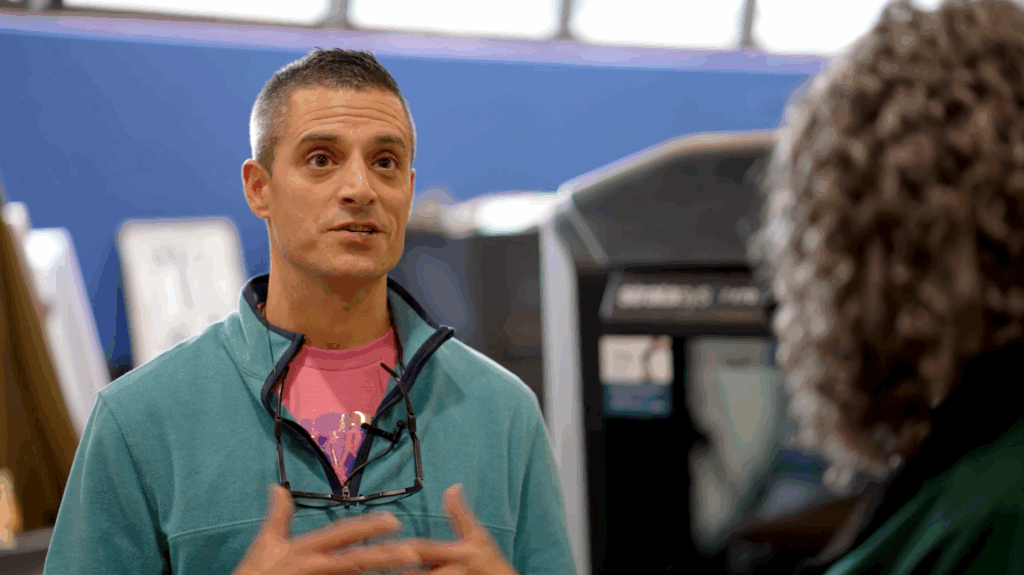
A classmate eventually told him about a place he’d never heard of: Manchester Craftsmen’s Guild. “He said it was like Disney World, but real,” Justin laughs. When he walked in for the first time, he felt that same childhood spark, but bigger. Here was a space where young people could create, belong, and grow alongside practicing artists. “I didn’t know a place like that could exist,” he says.
Justin began volunteering at MCG more than 15 years ago. One role led to another—studio assistant, teaching artist, coordinator, programming director—until eventually he became Executive Director. Through it all, his philosophy has stayed the same: art is a doorway. It builds confidence. It builds community. It builds hope.
“Walking in here every day feels like a privilege,” he says. “I get to help young people experience the same spark that once changed my life.”
Dr. Marissa McClure Sweeney
As a child, Marissa McClure Sweeney always felt like she saw the world a little differently. Adults noticed it too. They encouraged her to express that difference through drawing, making, and imagining—long before she understood that this way of seeing was its own kind of artistry. “I always wondered if other kids felt this way,” she recalls. “I wanted to meet them, hear their ideas, understand how they thought.”
One elementary school teacher in particular changed everything. She recognized Marissa’s vision and began bringing her into studios, introducing her to working creators, even taking her to see architectural models being built. “They talked to me like another artist,” Marissa says. “Even though I was in third grade.” That early respect shaped her entire career. She vowed to take children’s ideas seriously, to meet them at eye level, and to create spaces where their thinking was valued.
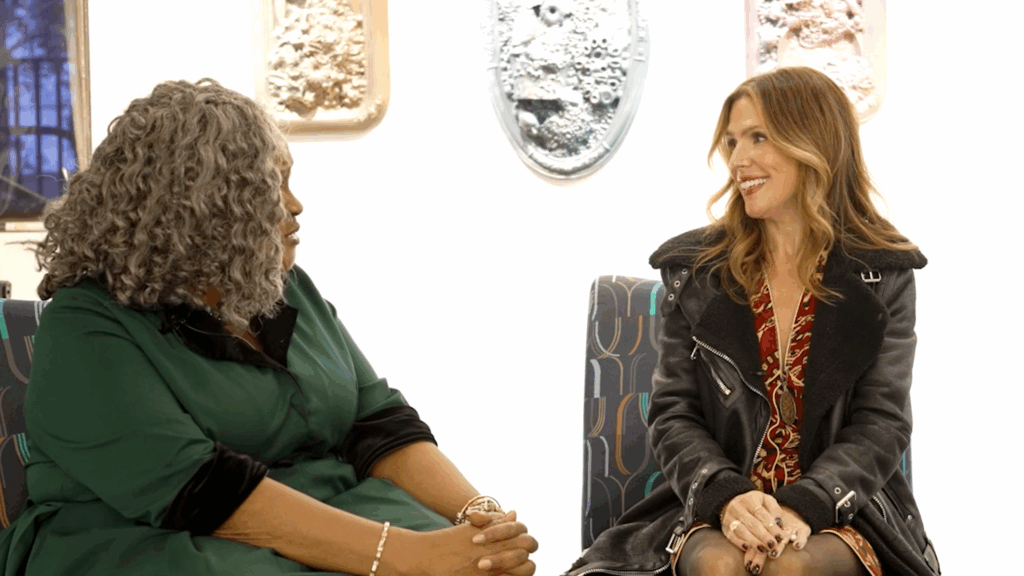
Everything shifted again when she became a parent. Instead of teaching children as a professional standing apart, she began making art with her own kids side by side, like peers. “What could we make together?” she wondered. That question sparked years of exploration that led to a community-based studio program, international collaborations, a book, and eventually an exhibition.
Her work centers on a central idea: making visible the creative and intellectual labor of children, which is often hidden, underestimated, or dismissed. “Children should be included in the conversations that affect them,” she says. “Their voices carry weight, and we need to treat them as full participants in our shared world.” She believes that cultural spaces should be inclusive, conversational, and alive rather than silent reliquaries.
Outside the studio, Marissa finds grounding in the rhythms of home: gardening, cooking, baking, tending plants, walking outdoors with her five children.
Season 1, Episode 2, “The Art of Social Change,” is coming soon!
Carlow University is as bold and compassionate as the people who bring its mission to life. Join President Dr. Kathy Humphrey as she introduces you to inspiring students and faculty who are turning empathy into impact and compassion into change. In each episode, we’ll take you behind the scenes and into the stories of artists, educators, leaders, and athletes working every day to create a more just and merciful world.