
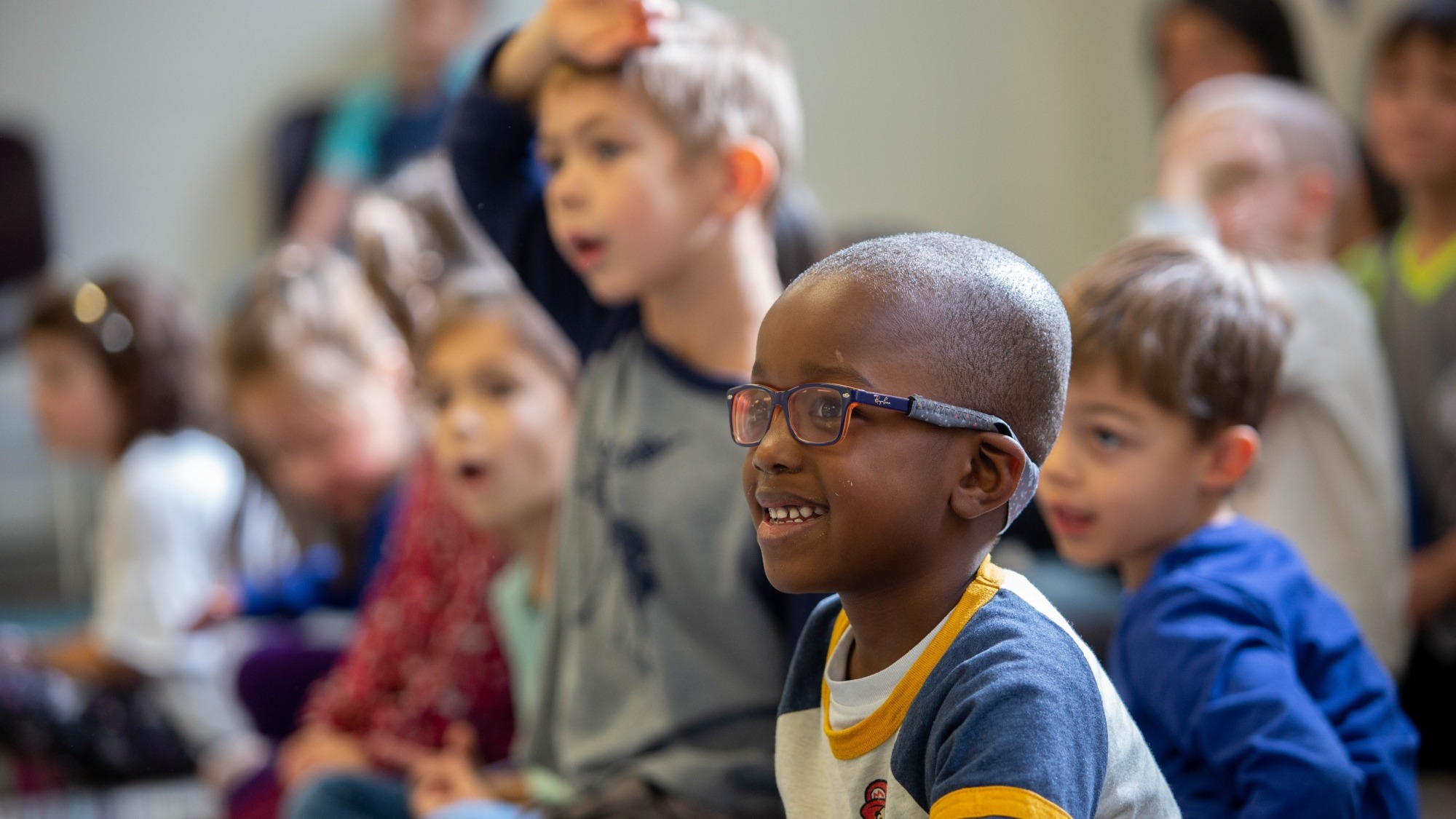
“This [childhood] is the time of great powers and deep mysteries: the human being develops like a seed hidden in the earth that germinates and grows to become a spike of wheat.” – Maria Montessori, Citizen of the World
In 2020, when we all spent more time together at home, our family developed an interest in puzzles. Reluctantly, my oldest son would give his younger brother the last piece of the puzzle to complete our days-long assembly mission. Once, we borrowed a puzzle from a neighbor. To our sons’ dismay, the last piece of the puzzle was missing! How could this be? It will never be complete!
As a Montessori educator of preschool aged children at Carlow University’s Campus Lab School, I often think of the children in my classroom as a puzzle. I wonder what picture is going to develop and unfold during their three-year cycle in the Montessori environment. A Montessori education is special; it holds all the pieces in the development of a whole child – physical, social, emotional, and cognitive – all while being devoted to the human spirit.
Dr. Maria Montessori, an Italian educator, physician, and scientist, opened her first school in a poor neighborhood in San Lorenzo, Italy, almost 125 years ago. In 1906, she created the first Casa dei Bambini (Children’s House), where children engaged with carefully designed materials and had opportunities for concentration and self-directed learning based on observation.
Montessori education is known for fostering independence in children and promoting an individualized approach to learning. It fosters joy and promotes student inquiry about the world around them. There are four traditional hallmarks of Montessori education:
- Within the classroom, a Montessori philosophy recognizes the individual; students learn at their own pace and advance when they are ready. Trained Montessori educators intentionally design their classrooms, materials, and daily routines to encourage independence in the environment. Students select materials and work in comfortable areas of the classroom.
- Montessori classrooms feature well-crafted, hands-on materials designed to build mathematical, language, and sensory skills. Much like traditional classrooms, Montessori education teaches common subject areas of mathematics, geometry, language, geography, history, and science. The topics are entwined creating an immersive experience and developing natural curiosities.
- The classroom is a community of learners with three age groups. At Carlow, our PreK classroom includes children ages four, five, and six. Children feel a sense of belonging, develop empathy for each other, and learn how to collaborate with one another. This family structure allows older children to be leaders and role models, while younger children feel supported and build confidence. Teachers model kindness, respect, and peace.
- Montessori classrooms allow students to develop autonomy, within limits. Trained Montessori teachers set boundaries for students while supporting them to become active participants in their learning. Children are encouraged to use tools and materials to answer their own curiosities, while managing their work and learning from their mistakes.
As this type of education quickly caught on and was proven effective, the movement continued to expand. Today, there are over 5,000 Montessori schools in the United States alone, serving over 1 million children.
It’s easy to see why. Montessori education encourages children’s natural curiosity. Children learn and develop adaptive skills to engage in a constantly changing world. Envision a young child as if they were a puzzle: each piece a unique discipline. When it all comes together, we finally can see the whole picture.
Laurie Laird is a Montessori educator at The Campus Laboratory School.