This June, Carlow University President Dr. Kathy Humphrey is heading to Rome and Vatican City for the ACCU Rome Seminar, where she will join Catholic higher education leaders from across North America to explore the future of Catholic education and its impact on students, communities, and the common good. Set in a place deeply connected to the faith and values that align with Carlow's Mercy mission, the experience offers a unique opportunity to collaborate with fellow Catholic institutions, exchange ideas, and engage in meaningful conversations about the role of Catholic higher education in today's world.
Follow Dr. Humphrey's journey to Rome as she represents Carlow University at this once-in-a-lifetime experience, connecting faith, leadership, and purpose on the world stage.
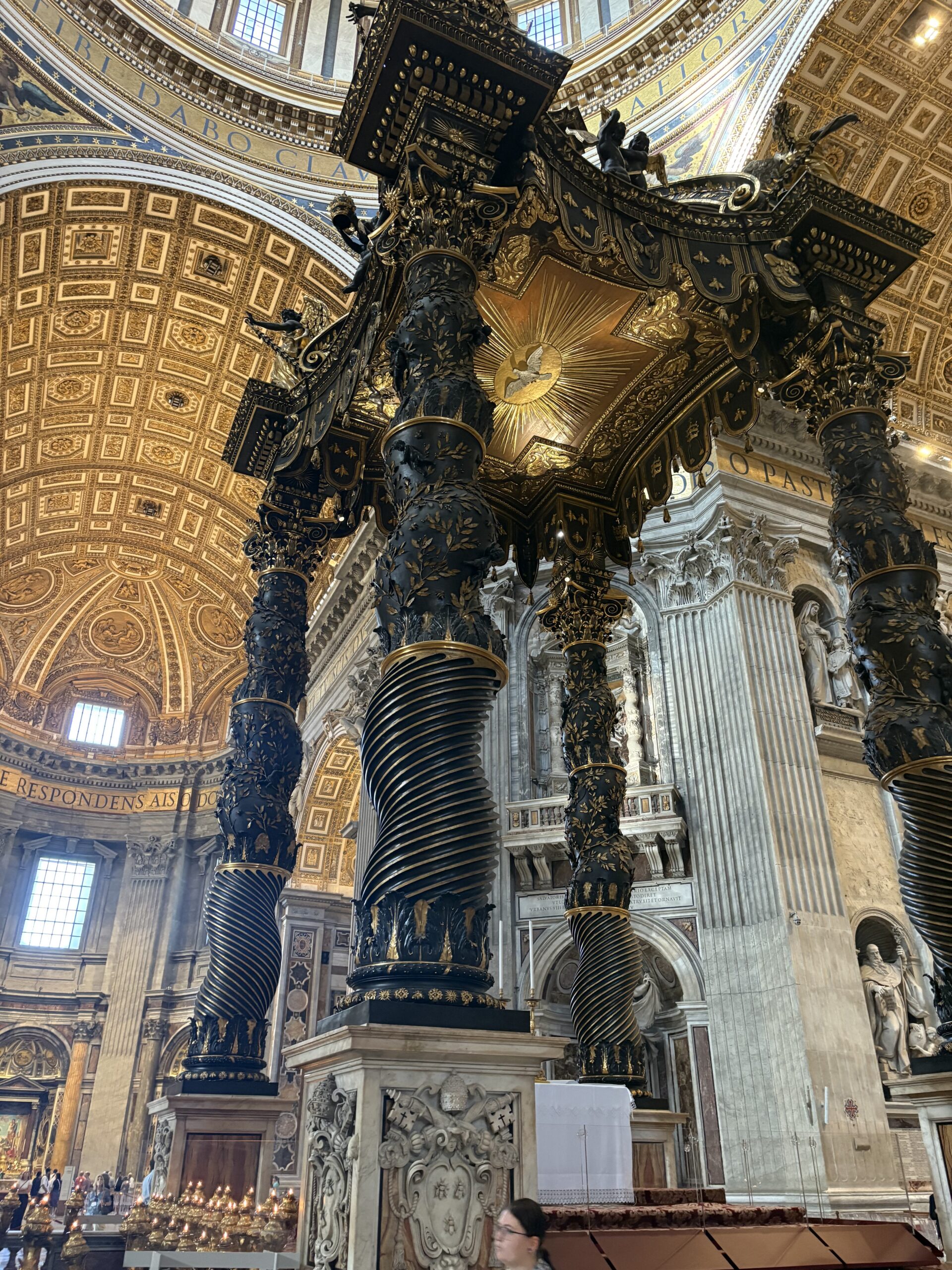
Mass has just concluded at the Basilica, and I find myself still reflecting on the beauty of what we have experienced together. What struck me most was not only the grandeur of this sacred place, but the extraordinary gathering of God’s people within it.
There were thousands present, and among them, so many different languages being spoken. In that moment, I could not help but think of Pentecost.
Pentecost reminds us that difference does not divide—it reveals the power of the Holy Spirit. Many voices. Many tongues. Many peoples. And yet, one message, one faith, one God drawing us all together. Here in this holy space, that same spirit felt so present. The variety of languages was not a barrier. Rather, it was a beautiful reminder that the Church is alive in every nation, every culture, and every heart that is open to God.
There was something deeply moving, and deeply spiritual, in witnessing that kind of unity. It was a reminder that faith is greater than geography, greater than language, and greater than any boundary we may create. We were not separate people gathered in one place. We were one people, united in worship and held together by the Spirit of God.
And as I reflect on this moment, I also think about Carlow University and the sacred mission we have been called to carry forward. At Carlow, we are rooted in the Mercy tradition, a tradition that calls us to honor the dignity of every person, to welcome difference as a gift, and to build a community where each voice matters. What we witnessed here today is, in many ways, what we strive to live every day on our campus.
We are a learning community made stronger by people with different stories, backgrounds, gifts, and perspectives. And just like that Pentecost moment, our differences are not obstacles to overcome. They are part of how God teaches us, stretches us, and reminds us that we belong to one another. This is what it means to educate for mercy, for justice, and for the common good.
For me personally, this moment is also a leadership lesson. It reminds me that to lead well is not simply to speak, but to listen. It is to create space for many voices, to recognize the image of God in every person, and to trust that the Spirit often moves most powerfully through the wisdom of community. If I am to lead Carlow well, I must continue to be a leader who listens deeply, welcomes broadly, and remains anchored in faith, humility, and purpose.
Perhaps that is why the experience felt so profound. It offered a glimpse of what heaven must be like—people from every corner of the world, standing together in praise, in peace, and in the presence of God.
What an amazing gift it is to witness the universality of our faith so vividly. Moments like this renew the soul. They remind us that the Church is not bound by walls or words, but united always by the Spirit of God. And they remind me, as President of Carlow University, that our mission is not simply to educate minds, but to form hearts, build community, and prepare people to serve a world that is beautifully diverse and deeply in need of mercy.
Rome greeted us today with steamy 85-degree temperatures, but the heat did little to diminish the energy and excitement of our conversations. The day was filled with remarkable speakers, thoughtful discussions, and opportunities to deepen our understanding of the Church and its mission in the modern world.
One of our most engaging conversations was with Archbishop Carlo Maria Polvani who emphasized that Catholic institutions should always place the human person at the center of every discussion and decision. They should be places where every mind is nurtured, challenged, and given the opportunity to grow.
During our conversation, he agreed with the familiar phrase, "A mind is a terrible thing to waste." He spoke passionately about the role of artificial intelligence, not as a replacement for human thought, but as a tool that can elevate our thinking. Rather than simply collecting facts, he encouraged us to use AI to ask deeper questions about what we have learned and discovered. His perspective offered a thoughtful reminder that technology is most valuable when it serves human flourishing.
While I enjoyed all of today's speakers, my favorite discussion was with Msgr. Anthony Onyemuche Ekpo, who provided fascinating insights into the work of the Roman Curia. With a wonderful sense of humor, he jokingly described himself as the "deputy deputy vice Pope," immediately putting everyone at ease.
Msgr. Ekpo explained that very little reaches the Pope without first passing through the Curia's administration. He described the unique role of the Pope as both prophet and diplomat.
Beyond the humor, Msgr. Ekpo made clear that the Curia exists to serve both the Pope and the Church. It was created because the work of the Church required many hands and many talents. We learned about the Curia's structure, its many dicasteries, and the responsibilities entrusted to those who serve within them.
One theme that resonated deeply with me was his reminder that the mission of the Church is to preach the Gospel. He noted that every Christian shares this responsibility, and sometimes the most powerful preaching happens without words. Our actions, our attitudes, and the way we treat others should proclaim the Gospel every day.
Those words stayed with me throughout the afternoon. They challenged me to be more intentional about ensuring that my own life reflects the message I profess to believe. It is easy to speak about faith; it is far more challenging—and far more important—to live it.
Msgr. Ekpo also offered a valuable lesson on leadership through the concept of synodality. He described it simply: "Tell me what you see, and I will tell you what I see, and together maybe we both can see more." That vision of collaboration, listening, and shared wisdom struck me as a powerful model not only for the Church but for leadership in any setting.
Later, we met with reporters who have traveled extensively with and covered the Pope. They spoke about the differences between Pope Leo and Pope Francis, while noting that many of the priorities central to Pope Francis remain important today. Two themes stood out: the belief that in Christ we are all one, and the conviction that peace must remain our aim. Peace, they noted, is the antidote to polarization and division.
The day included many more speakers and conversations than I can adequately capture in a single post. Each offered a unique perspective on faith, leadership, service, and the challenges facing the Church in our world today.
As I reflect on the day's discussions, I find myself returning to a common thread woven through each conversation: the importance of seeing the dignity of every person, listening carefully to one another, and using our gifts in service of something greater than ourselves.
There is much more to share, but that will have to wait for tomorrow.
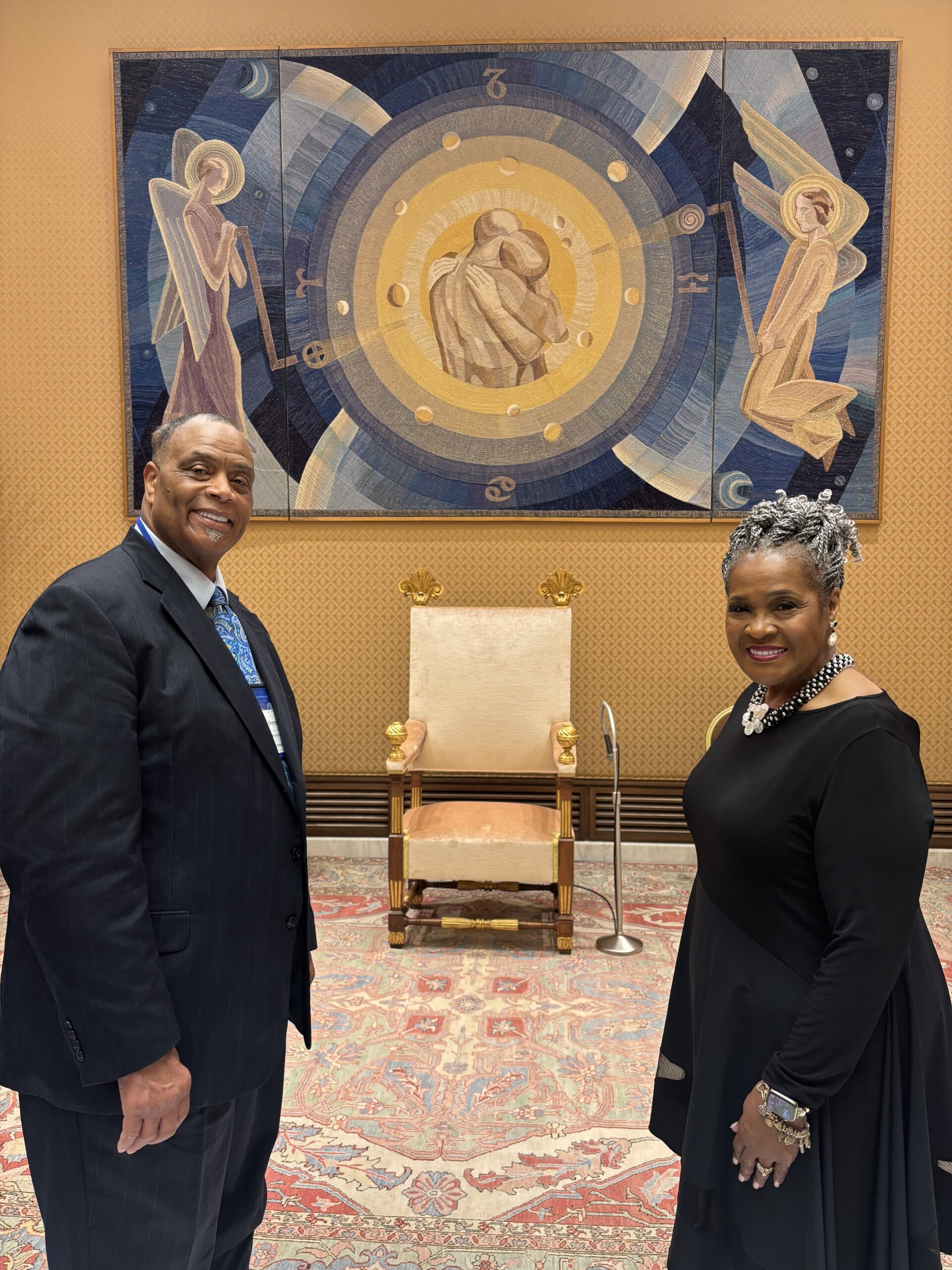
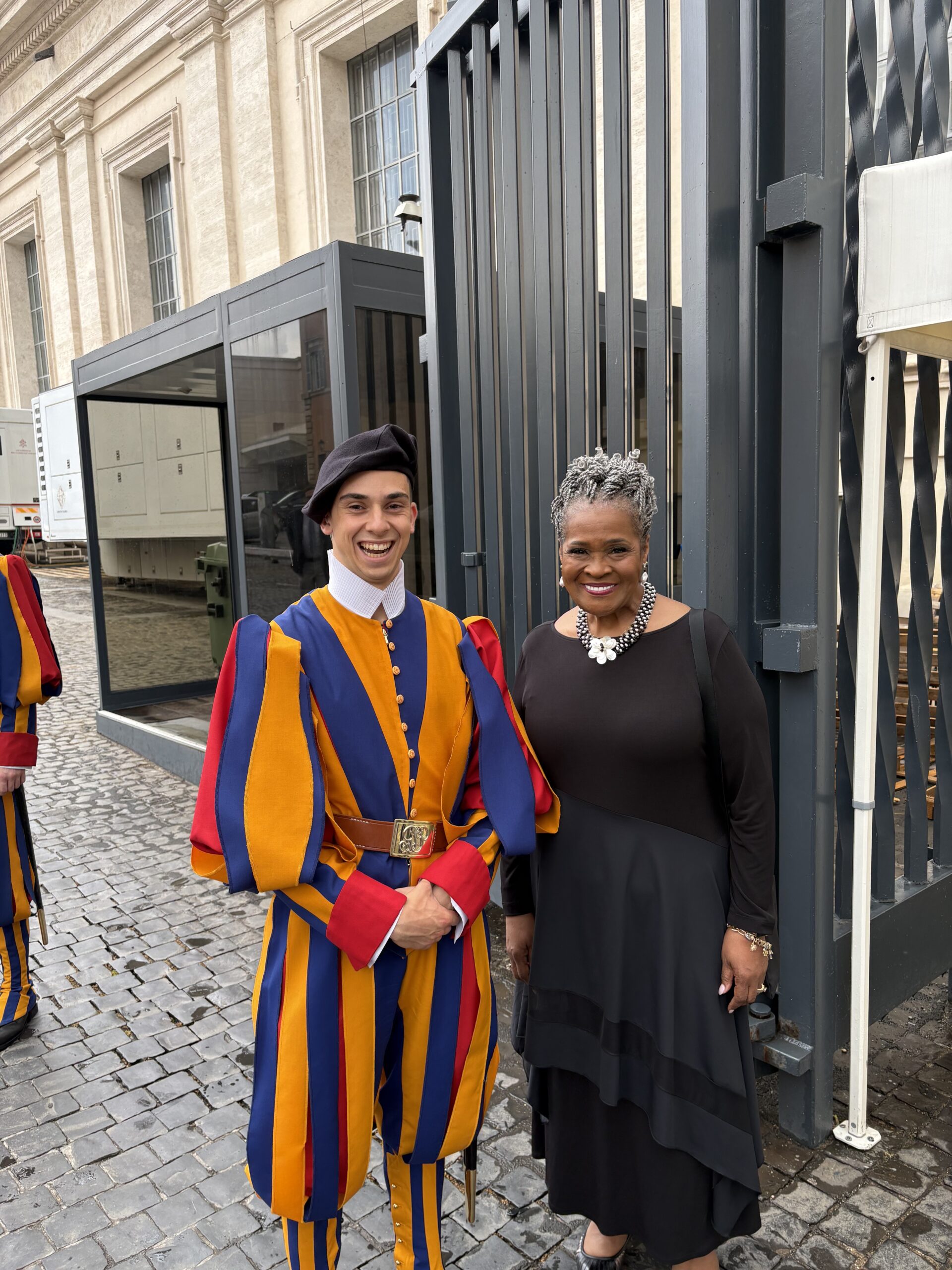
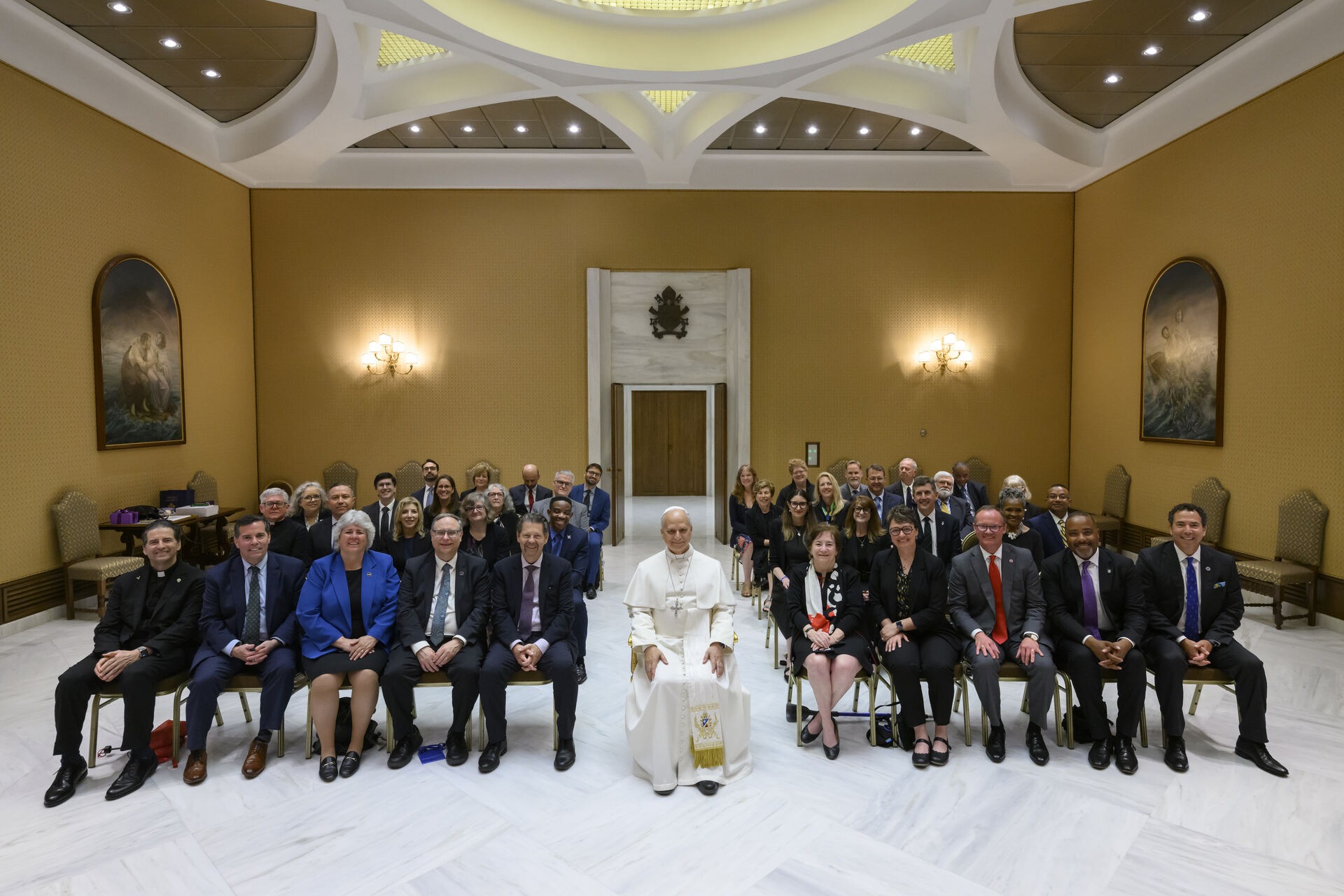
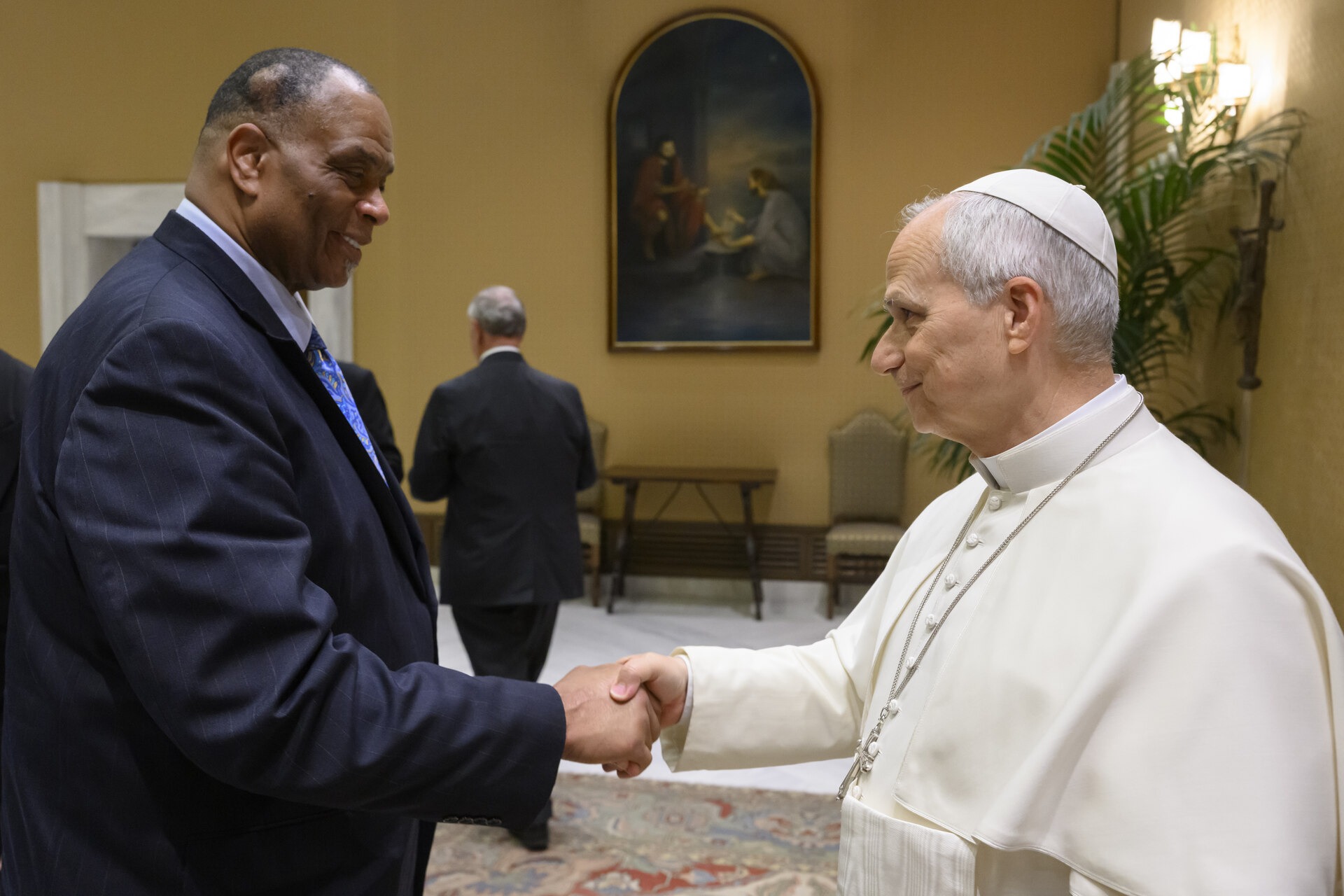
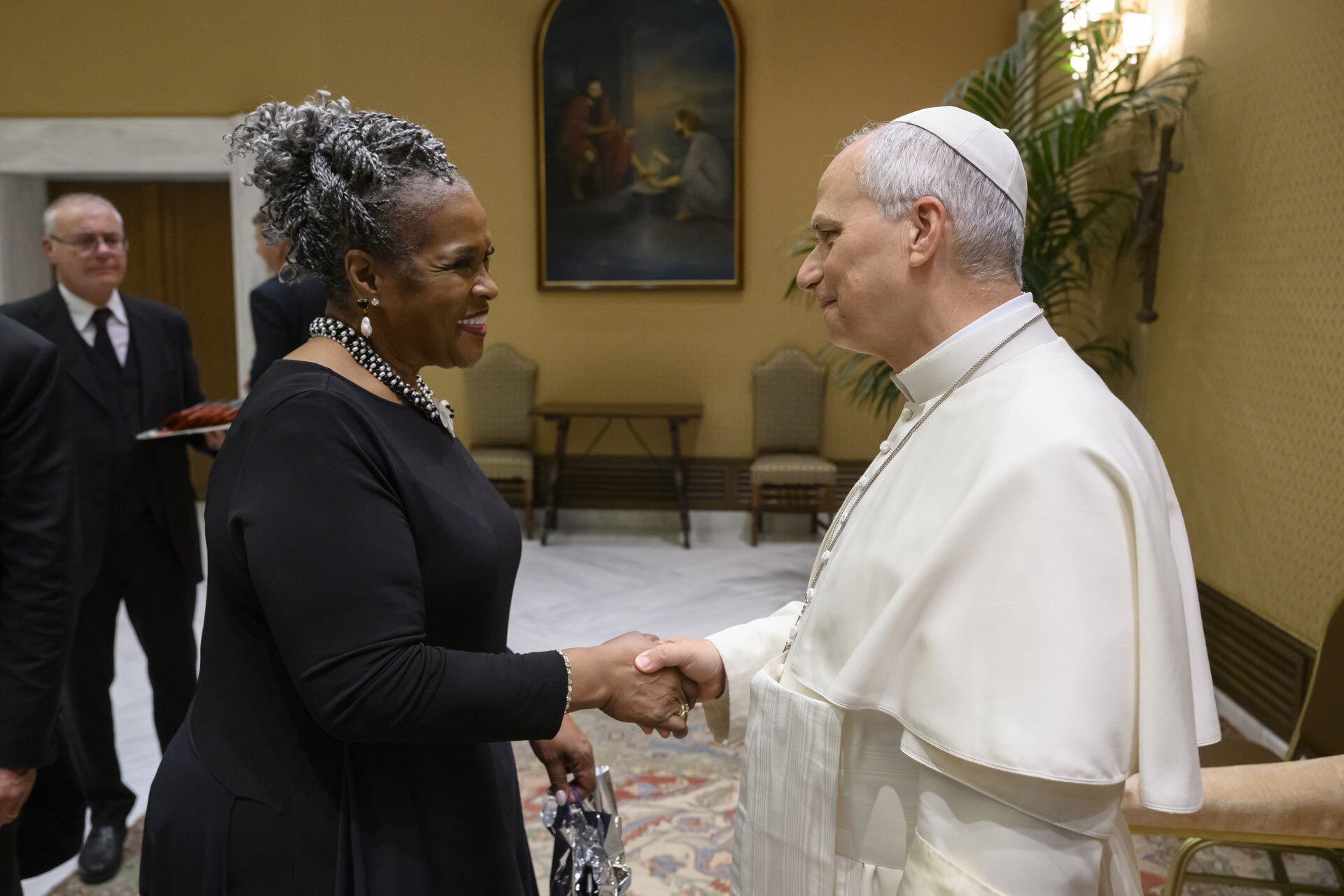
Throughout my career in higher education, I have been blessed with opportunities to meet many remarkable people. I have met two Presidents of the United States, First Lady Michelle Obama, renowned poets Maya Angelou and Nikki Giovanni, entertainers, athletes, and leaders from every walk of life. Each encounter was memorable in its own way.
Yet none of those experiences prepared me for meeting the Holy Father.
Standing before Pope Leo XIV was not simply a meeting with a world leader or a famous figure. It was a profoundly meaningful moment—one that I will carry with me for the rest of my life. As I shook his hand, I was struck by the reality that I was standing before a man entrusted with shepherding more than a billion Catholics around the world. A man chosen by his peers in a remarkably brief conclave. A man whose first message to the world was a simple but powerful call for peace.
What surprised me most was not the grandeur of the moment, but the humility of the man.
Pope Leo was warm, attentive, gracious, and fully present. In a room filled with university presidents and leaders from across the United States, he made each of us feel seen. His words were thoughtful, encouraging, and deeply rooted in his concern for the dignity of every human person.
As leaders of Catholic universities, he challenged us to remember that Catholic education must be different. We are not called simply to fill students' minds with information or prepare them for careers. We are called to form the whole person—to educate both mind and heart.
One message, in particular, resonated deeply with me. Pope Leo reminded us that Catholic universities must help students develop what he called a "global vision of reality"—one that integrates knowledge, purpose, faith, and human dignity into a coherent whole. In a world overflowing with information yet often lacking wisdom, he challenged us to help students discover not only what they are capable of doing, but who they are called to become.
As I listened, I found myself inspired by his intentionality, his humility, and his unwavering commitment to human dignity. He spoke with conviction, yet with kindness. He challenged us, yet encouraged us. He embodied the very values we hope to instill in our students: compassion, courage, mercy, and a commitment to creating a more just world and merciful world.
To say that I was in awe would be an understatement.
This was more than a visit to the Vatican. It was a moment of reflection, renewal, and inspiration. It reminded me why Catholic higher education matters and why our work is so important.
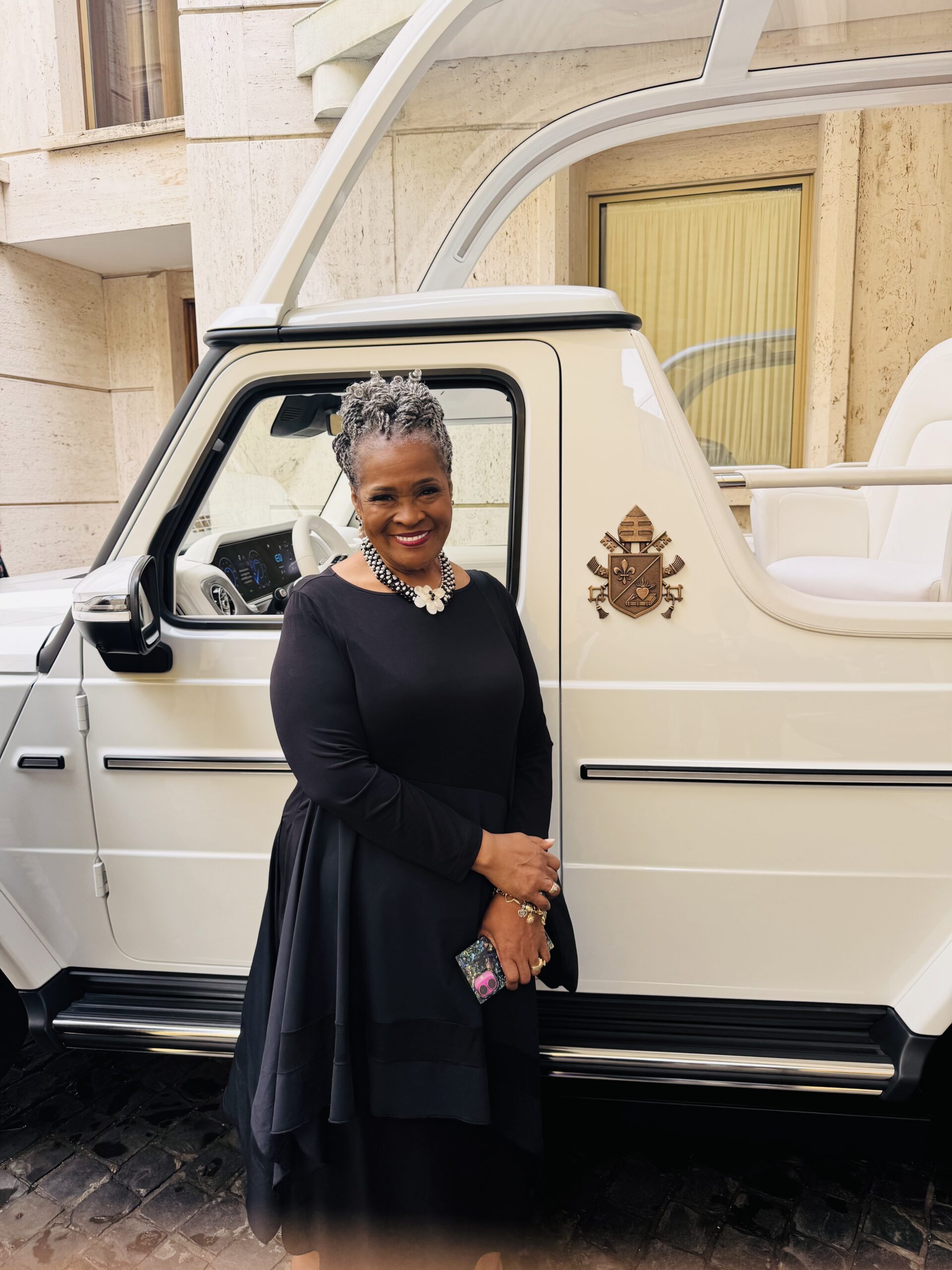
And as if the day could not get any more memorable, as we left the audience hall, the Popemobile was waiting in the driveway. I must admit—it was pretty cool.
Tomorrow, I will share some pictures from this extraordinary day.