Dr. Kunal Bhanot did not set out to become a physical therapist. Growing up in India, he had been encouraged to pursue medicine, following a path his family understood well. But everything changed during a visit to a spinal cord rehabilitation hospital, where he watched patients relearn how to move.
“That day opened a whole new world to me,” he said. “I didn’t know this profession existed, but I knew immediately it fit who I am.”
What he saw in that moment was not just treatment. It was a different kind of healing. It was patient, personal, and grounded in human connection. Today, as founding program director of the Doctor of Physical Therapy (DPT) program at Carlow University, that same philosophy shapes how he prepares the next generation of physical therapists.
Building a Program with Purpose
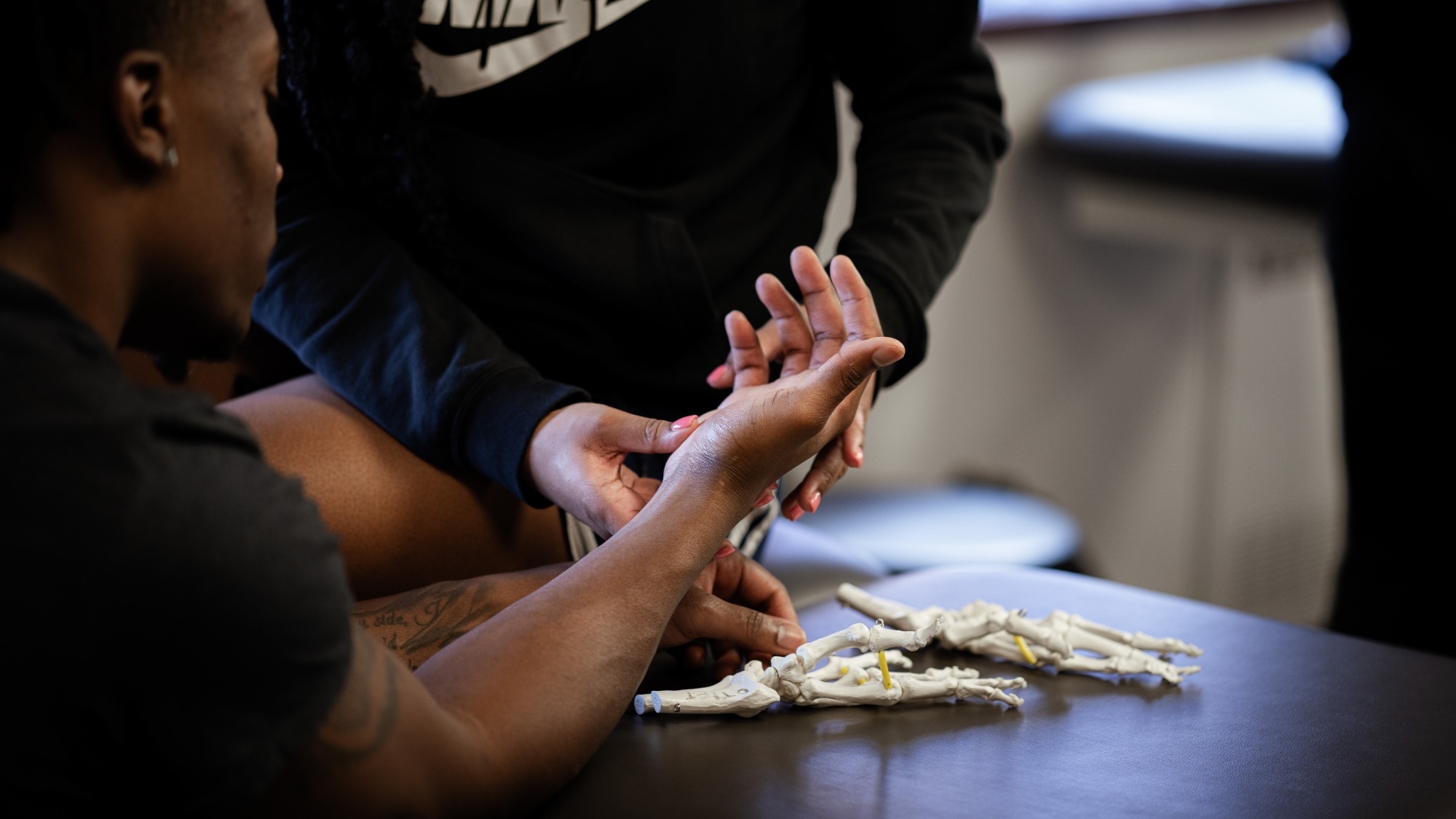
Carlow’s DPT program launched in fall 2023 with a clear goal: to develop clinicians who are not only skilled, but complete. The 33-month program combines classroom learning with 36 weeks of clinical education, including extended internships at the end of the program that allow students to fully step into the role of a physical therapist.
By the time students graduate, they have already spent months working in real clinical environments, applying what they have learned and building the habits they will carry into their careers. But for Dr. Bhanot, structure alone was not enough. From the beginning, the question was how to create something different.
An Innovative Framework
At the center of the program is a simple framework: the head, the hand, and the heart.
The head represents critical thinking. The hand reflects technical skill. Both have long been priorities in healthcare education. But the heart, which includes empathy, compassion, and the ability to see the person behind the condition, has often received less intentional focus. “[As a profession] we’ve done a great job developing technical graduates,” said Dr. Bhanot. “But we have not done a great job infusing compassion and empathy into our graduates.”
At Carlow, that balance is intentional. The University’s Mercy tradition emphasizes care for the whole person, a philosophy that aligned closely with Dr. Bhanot’s own approach. “When I talked about this philosophy, they said, ‘That’s what we call mercy here,’” he said.
Teaching the “Heart”
Translating that philosophy into practice meant rethinking how students are taught. In addition to clinical and scientific coursework, Carlow’s DPT students engage in a series of humanities-based experiences designed to deepen their understanding of emotion, communication, and human connection.
In one course, students read and interpret poetry, exploring the emotional perspective of the writer and reflecting on their own responses. In another, they analyze and create visual art, learning to observe and interpret meaning beyond what is immediately visible. A third course focuses on communication, drawing from the University’s communication faculty to teach both the science and the art of interacting with patients, families, and colleagues. Dr. Bhanot describes these as opportunities to develop skills that are often overlooked but essential to effective care. “These are not soft skills,” he said. “These are hard skills.”
Together, these experiences help students grow not only as clinicians, but as people who can understand and respond to the needs of others.
Expanding the Definition of Care
The program also reflects a broader understanding of what it means to help someone heal.
Through coursework in lifestyle medicine, students learn to assess and support multiple aspects of a patient’s well-being, including physical activity, nutrition, stress, sleep, social connection, and substance use. Rather than focusing on a single intervention, they are trained to consider how these factors work together to influence recovery.
This approach prepares students to think beyond immediate symptoms and consider the full context of a patient’s life. It also provides an additional opportunity for professional development. Graduates of the program are eligible to sit for certification in lifestyle medicine without completing additional continuing education, giving them an added credential as they enter the field.
A Program Built Around the Student
While the curriculum is innovative, the student experience remains highly personal.
With a cohort of approximately 28 students, the program is intentionally small. Faculty members get to know students early, beginning with the admissions process. Each student is assigned a faculty advisor before classes even begin, creating a relationship that continues throughout the program.
Regular check-ins allow faculty to monitor both academic progress and overall well-being. Students complete reflections each semester that help guide these conversations, ensuring that they are supported both in and out of the classroom. “Physical therapy school is hard,” Dr. Bhanot said. “But it doesn’t have to be miserable.”
Students complete 36 weeks of internships, with the majority occurring in the final year of the program. This structure allows them to build a strong foundation before stepping into extended clinical experiences where they begin to function more independently.
Ready for What’s Next
Because of the program’s size and flexibility, clinical placements can be tailored to each student’s goals. Some remain in the Pittsburgh region, while others complete internships across the country, often in communities where they hope to begin their careers. Students with specific interests, such as pediatrics or pelvic health, are also given opportunities to gain relevant experience before graduating.
“We work with them one-on-one to understand their needs,” said Dr. Bhanot. “It’s not just their geographic needs, but their clinical needs as well.”
By the time students complete their final rotations, they have spent months functioning in clinical environments and building relationships within the profession. Some leave with job offers already in hand. Others have developed connections that position them to move into employment after licensure.
“We had a student who wanted to go back to New York City and practice there, so we arranged his final two internships in New York,” Dr. Bhanot said. “When I spoke with him a few weeks ago, he already had a job offer from the employer where he was finishing his internship. We have another student from New Jersey who wanted to return there, and she has received a job offer from her placement as well.”
Clinical partners have also taken notice. “They always tell us the same thing,” said Dr. Bhanot. “Your students are different.”
Never miss a story from Carlow University
Follow us on LinkedIn | Subscribe to The Ripple Effect Newsletter | Subscribe to The Human Work on Substack