



Carlow University Board Development Cookbook

A practical guide for telling Carlow’s story, opening doors, and helping good conversations find their next step.
Trustees open doors. Carlow helps walk through them.

Why this guide exists

You speak about Carlow because its mission matters to you, and because you see what it makes possible for the students and community. The hard part is, however, knowing how to take the conversation to the next level.

This book is exactly what its name promises: a recipe book for bringing new supporters into Carlow's fold — the stories, the openings, and the turns. Whatever the outcome, sharing Carlow’s story creates the possibility of connection.

Quick Facts: Carlow in one breath

Carlow is a private Catholic university in Pittsburgh’s Oakland neighborhood. Founded by the Sisters of Mercy in 1929, it carries their legacy forward by educating the next generation of ethical leaders to create a more just and merciful world.

2,453Students
10 to 1Student to faculty ratio
46%Graduate students
83%Undergraduates who are women
46%Traditional undergraduates who are Pell eligible

Known for who you are. Prepared for who you’ll become.

Our shared purpose

Carlow is in an important moment, and trustees have a meaningful role in what comes next. The University prepares its students to become compassionate, responsible leaders in their particular discipline and gives them the ability to create a just and merciful world. It also offers something deeply personal: a community where students are known, supported, and encouraged to become who they are capable of becoming.

That is the human center of this work. A conversation about Carlow is ultimately a conversation about opening possibilities for a student, a family, and a community.

Eight stories worth telling

You do not need to know every detail to begin. It starts with one Carlow story, thoughtfully connected to what matters to the person standing before you.

Transforming Pittsburgh’s Educational Experience

Transforming Pittsburgh’s Educational Experience

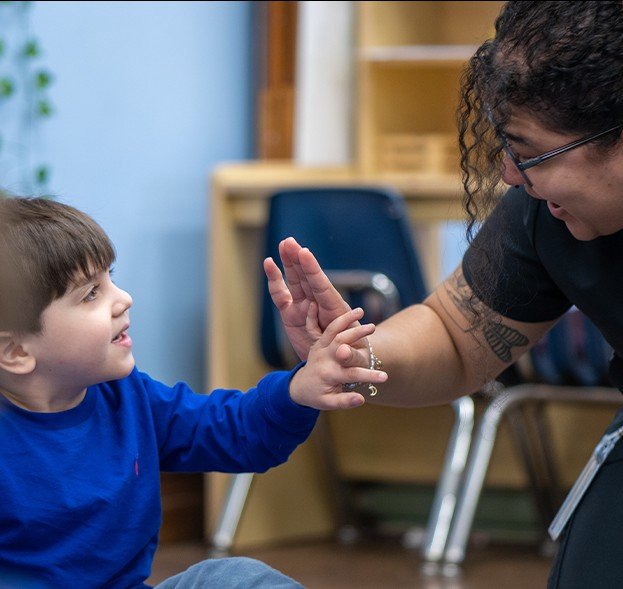
A child who cannot read by third grade faces a different path through school and life. The Peirce Dyslexia Program responds from both directions: tutoring for children whose families may not be able to afford specialized help, and advanced training that places certified reading specialists in regional classrooms.

  • 42 graduate scholarships for teachers totaling $322,000
  • More than 900 regional educators trained
  • 181 children tutored at five neighborhood sites
  • 102 children served through Camp Carlow summer literacy.

“Carlow trains the specialist who changes a child's whole trajectory — then subsidizes her tuition so she'll actually be able to do it.”

How someone can help: Fund a teacher scholarship, underwrite a tutoring site, or sponsor Camp Carlow.

Programs Designed for the Lives Our Students Lead

Programs Designed for the Lives Our Students Lead

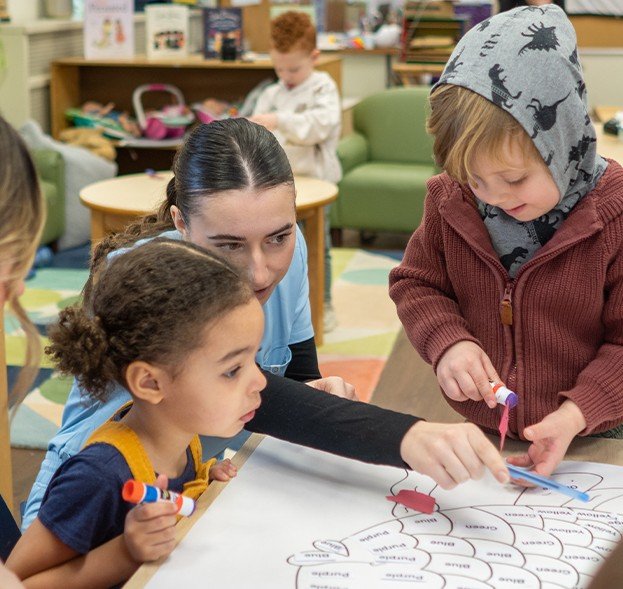
Traditional degree programs can require childcare workers to leave paid jobs for unpaid practicums. For someone living paycheck to paycheck, that is not a hurdle. It is a wall. The Early Childhood Apprenticeship Hub lets apprentices keep working and earn up to 21 college credits on the job. Their workplace becomes their classroom.

Named for the late Dr. Rae Ann Hirsh, who built Pennsylvania's first federally designated four-year apprenticeship of its kind.

Stacked scholarships and state aid mean most apprentices graduate with little or no tuition debt.

How someone can help: Fund a cohort, become an employer partner, or open a door to a regional foundation.

Care that serves twice

Care that serves twice

Carlow's graduate speech-language pathology students staff the only no-cost speech-language clinic in the Pittsburgh region — children and adults, stuttering, language delays, recovery after illness. In person or by telehealth, supervised by licensed faculty. Even the parking is free, because transportation is a real barrier.

“The clinic serves the neighborhood and trains the workforce at the same time. Every dollar does two jobs.”

How someone can help: Support clinic operations, equip learning spaces, or connect Carlow with health systems and pediatric funders.

The Purple Door

The Purple Door

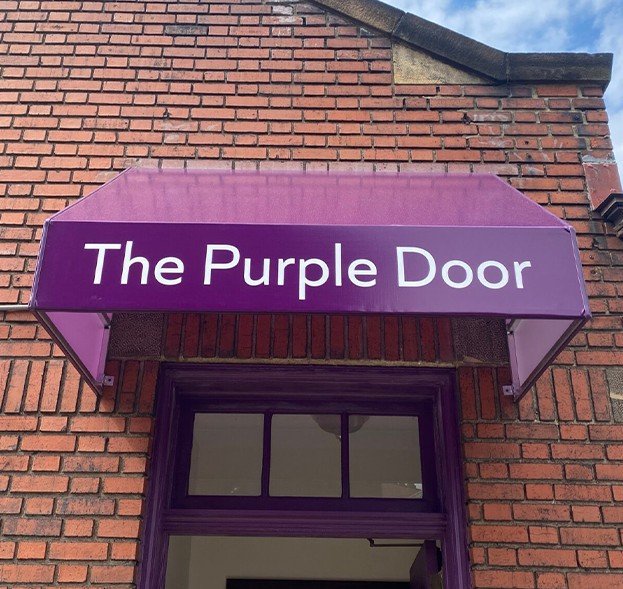
Most campus food pantries hand someone a box. The Purple Door lets people shop. Students, staff, and West Oakland neighbors choose what fits their family, diet, and culture, including fresh food and supplies for parenting students. The model costs more to run because dignity is part of the service.

Founded by Sister Sheila Carney, RSM, the pantry is supported in part by produce from a nearby community garden planted by Carlow students.

“The difference between being fed and being welcomed is the difference between a box and a door.”

How someone can help: Fund pantry operations, organize a corporate supply drive, support the proposed greenhouse renovation, or bring a volunteer team.

Dionne’s story

Dionne’s story

After Carlow student Dionne Scott White was murdered by her partner in 2003, the University built a lasting response. Project SAFE brings violence-prevention work across campus with regional crisis partners, while Dionne’s Story, an ongoing anthology published by Carlow, gives survivors of domestic and sexual violence a place to reclaim their narratives in print.

Volume IV of Dionne’s Story appeared in 2024.

“Carlow turned the worst thing that ever happened to it into a twenty-year commitment — and then gave survivors a press to publish in.”

How someone can help: Fund peer educators, support the anthology, connect Carlow with violence-prevention funders, or lend legal or clinical expertise.

The Madwomen

The Madwomen

Madwomen in the Attic, founded 1979, is one of the longest-running women's writing programs in America: workshops of twelve, open to women ages 18 to 99, undergraduates writing beside grandmothers. Its national prize, the Patricia Dobler Poetry Award, is open only to women over 40 who have never published a book — a deliberate correction to a publishing industry biased toward youth.

  • One of the longest-running women’s writing programs in America
  • International reach with an anthology, chapbook imprint, and MFA residencies in Pittsburgh and Trinity College Dublin.

“Somewhere in Pittsburgh there's a 50-year-old writing her first book in a workshop next to a 19-year-old. Carlow built the room where that happens.”

How someone can help: Endow the Dobler Award, fund MFA scholarships, or sponsor a public reading.

A symbol of faith & community

A symbol of faith & community

St. Agnes Church has stood as a symbol of faith and community in Pittsburgh for generations. Now, we'll not just preserve it, we'll restore its beauty while transforming it into a dynamic event and gathering space.

How your dollars can make an impact on the community:

  • Restoring the church's historic structure
  • Adapting interiors for modern use while maintaining its defining features
  • Ensuring sustainability and accessibility
  • Partnering with preservation experts to honor its legacy

How someone can help: Contribute to Carlow University’s $100M Capital Campaign – A Call to Build Beyond.

Lifesaving scholarships

Lifesaving scholarships

Carlow is home to one of only 16 cardiovascular perfusion programs in the country. Developed in partnership with leading regional health systems, the program helped pioneer education in this highly specialized field and remains nationally recognized for preparing professionals for a critical role in cardiac care.

How someone can help: contribute to scholarships that have a lifesaving impact.

Start the conversation

Lead with curiosity, not with the ask.
The goal of a first conversation is almost never money — it is to generate interest, arrange an introduction, invite a visit, or discover whether there's a real connection between this person and Carlow's mission. Begin with what matters to them. Invite perspective before inviting support.

Before you approach someone, feel free to call Advancement. We may already know them — and that knowledge makes your conversation better. If you're genuinely curious about the other person, you cannot do this wrong.

Openers

I serve on the board of a university in Pittsburgh doing fascinating work in healthcare, education, and community service.

I recently became more involved with Carlow, and one of its programs made me think of you.

I’m helping Carlow think about its next chapter, and I’d value your advice.

You’ve supported work in this area before. I’d love your perspective on something Carlow is building.

Match person to story

They care aboutA natural Carlow story
HealthcareSpeech-language pathology clinic or cardiovascular perfusion
Education and literacyPeirce Dyslexia Program
Workforce and the economyEarly Childhood Apprenticeship Hub
Women’s advancementMadwomen in the Attic
Food security and dignityThe Purple Door
Safety and justiceProject SAFE and Dionne’s Story
History and architectureSt. Agnes Church

Listen for alignment

You are listening for any sign that the story has found a place to land.

Heart

That is a real problem.

They care about the issue.

Head

How does that work?

They are engaging with the model.

Hands

Who runs that?

They are imagining involvement.

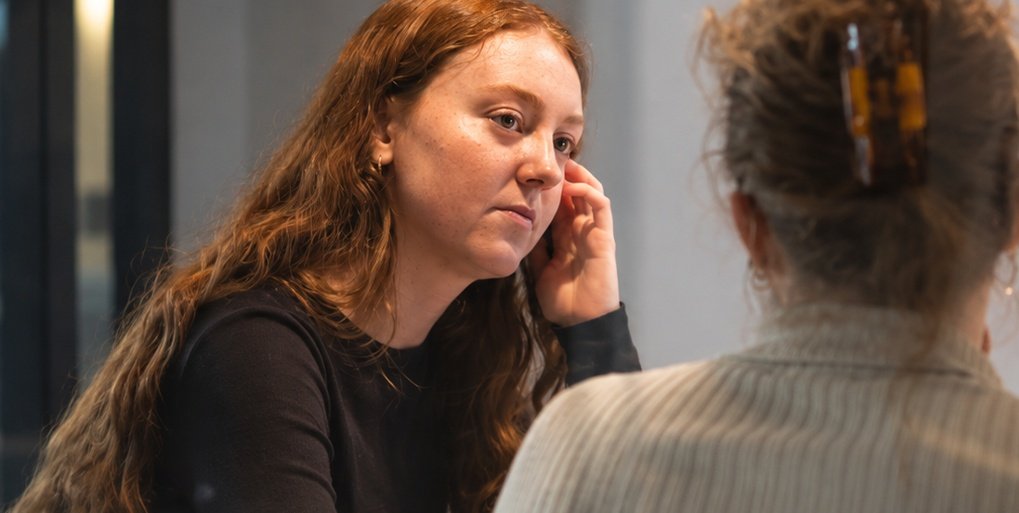
Two people in conversation

Any one signal is enough to suggest a next step. You do not need all three, and you do not need a checkbook to appear.

What not to lead with

  • Don't open with the capital campaign.
  • Don't open with a dollar amount.
  • Don't recite statistics — tell one story instead.
  • Don't promise a specific figure, building status, or ranking you're not sure of. (When in doubt: “Let me connect you with someone at Carlow who knows this.”)
  • Don't force the turn. If the moment isn't there, warmth is a fine outcome. There will be another conversation.

Hard questions, honest answers

Serious donors ask serious questions. Expect these, and answer with approved language, not improvisation.

Approved response from the VP of Advancement and the CFO: Carlow financial picture in donor-ready.

“For the detailed picture, let me connect you with our CFO or President Humphrey — they'd genuinely enjoy that conversation.”

Approved response from the President’s office on Carlow’s future vision and program direction.

Approved response including five-year enrollment trend from Institutional Research, plus approved cost-management examples.

Make the turn

The hard part – made easier. Most of us can praise Carlow all evening. The uncomfortable moment is the turn: would you like to be part of this? Here's the reframe that changes everything: You are not asking for something. You are offering someone a way into work that is meaningful to them. The goal isn't to force an ask into every conversation. It's to recognize alignment — and feel confident suggesting a next step.

Would you be open to learning more about where Carlow is making a distinctive impact?

Would you like to meet the president or the faculty leader who runs this program?

Come see it. Thirty minutes on campus explains this better than I ever could.

The gentle turn is the right turn ninety percent of the time.

Your perspective could help our students. Would you consider speaking with a class or advising a program?

There may be a way to contribute through your experience or relationships, even if philanthropy is not the first step.

Is there someone you think Carlow should meet?

Sometimes the most valuable person in a network isn't the eventual donor. It's the person who opens the right door.

If this resonates with you, there may be an opportunity to make a meaningful difference for Carlow students.

Would you want to explore what supporting this could look like?

Then pause and give them the space to respond.

Whatever they say, keep the door open

The only failed conversation is the one that never happens.

A natural responseWonderful. Let me set that up.

Your next moveContact Advancement within 48 hours.

A natural responseNo pressure. May I send you one useful thing about the program?

Your next moveAgree on one light follow-up.

A natural responseI’m glad I got to tell you about it.

Your next moveLeave the relationship warm.

Give. Contribute. Connect

Three ways to help. Financial support is one. People may fit one, two, or all three.

Give

Annual, major, named, planned, corporate, matching, or program-specific gifts

The campaign is “A Call to Build Beyond” — a $100 million effort spanning the restoration of St. Agnes, endowment growth, and investment in programs, people, and places.

Contribute

Mentor a student; speak in a class; advise leaders; create an internship; offer professional expertise

For many people, this is the front door — and giving follows later, on its own.

Connect

Introduce a supporter; open a corporate or foundation door; suggest a speaker; create a partnership; lend visibility

A single introduction can outweigh a check. The person who brings Carlow its next great friend may never write one.

You open the door. Carlow walks through it with you.

What the University will do:

Research the person or organization before a meeting.

Prepare you with relevant stories and talking points.

Bring the president, a dean, a faculty member, or a student into the conversation.

Arrange a campus visit, private tour, meeting, or dinner.

Build materials around the person’s interests.

Own the follow-up so you can remain the relationship’s friend, not its project manager.

You are never doing this alone.

The Carlow Story

The heritage of Carlow and why it matters.

Seven women with a purpose

In 1843, seven Sisters of Mercy arrived in Pittsburgh from Carlow, Ireland. They came to serve people who were poor, sick, or denied an education, carrying forward the religious community Catherine McAuley had founded in Dublin twelve years earlier.

They did not wait to become settled before beginning their work. Almost immediately, the Sisters entered the life of the city, teaching children, caring for people who were ill, and responding to needs others had overlooked. Their faith was expressed through action, with compassion made visible in the lives of the people they served.

In the years that followed, they established schools, an orphanage, and Mercy Hospital of Pittsburgh. That same commitment to meeting the needs of the moment would eventually lead them to found the institution that became Carlow University.

Mercy in action

That heritage remains central to Carlow today. It lives in transformational educational opportunities that welcome the whole person and prepare students to excel in their chosen work as compassionate, responsible leaders.

Mercy is not simply part of Carlow’s history. It is how the University continues to move toward need, turn compassion into action, and help create a more just and merciful world.

The work continues

For nearly a century, Carlow has paired rigorous preparation with individual attention and values formation. Students gain the knowledge and experience their chosen fields demand, while learning to lead with compassion, ethics, and a sense of responsibility to others.

Many institutions can talk about jobs and outcomes. Carlow’s sharper story is the combination: preparation for a meaningful career and an education shaped by Mercy.

Mission and values

Carlow prepares compassionate, responsible leaders for a just and merciful world. Its Mercy heritage comes to life through five values: Mercy, Hospitality, Service, Discovery, and Sacredness of Creation.

That is what makes the University’s story coherent. Literacy, workforce access, healthcare, food dignity, violence prevention, and women’s voices are not separate talking points. They are different ways Carlow puts its mission to work in the present tense.

From Mount Mercy to Carlow

1929

Mount Mercy College opens, with classes held in convent parlors.

1933

The college receives an independent charter during the Depression.

1945

The college welcomes returning service members.

1969

The institution becomes Carlow College.

2004 to 2005

Carlow becomes a university.

The thirty-second promise

You're about to meet someone. You have less than a minute. You open this book. Thirty seconds later, you should be thinking:

I know why this person might care about Carlow. I know which story I want to tell. I know how I might make the turn. And I know Carlow will help me take it from there.

This guide is unfinished on purpose. Its strongest future edition will be shaped by the conversations trustees have, the questions people ask, and the stories that stay with them.

St. Agnes Church against a blue sky